
10 Renewable Energy Solutions Tips for Buyers?
Choosing renewable energy solutions is not just a matter of comparing panel prices. Buyers must weigh local sunlight, roof condition, energy use, storage needs, maintenance, and the installer’s track record. A detailed quote should show equipment models, expected annual output, warranty terms, and assumptions behind savings estimates. Ask what happens on cloudy days. Ask again if the answer sounds too certain. Actual results depend on weather, usage, and system design.
The International Energy Agency’s Renewables 2024 report forecasts nearly 5,500 gigawatts of new renewable power capacity worldwide between 2024 and 2030. That scale signals a fast-changing market, but it does not guarantee a good deal for every household or business. IRENA reported that 81% of utility-scale renewable capacity commissioned in 2023 produced electricity at lower cost than fossil-fuel alternatives. Those figures describe broad market trends, not your roof or monthly bill. Fatih Birol, the IEA’s Executive Director, said: “The world is set to add more renewable capacity in the next five years than has been installed since the first commercial renewable energy power plant was built more than 100 years ago.” For buyers, the practical lesson is to compare carefully, not chase the biggest promise. Small details matter. This guide’s ten tips focus on checking proposals, matching technology to real needs, and spotting questions a sales conversation may leave unanswered. Even careful estimates can miss something; that deserves an honest look.
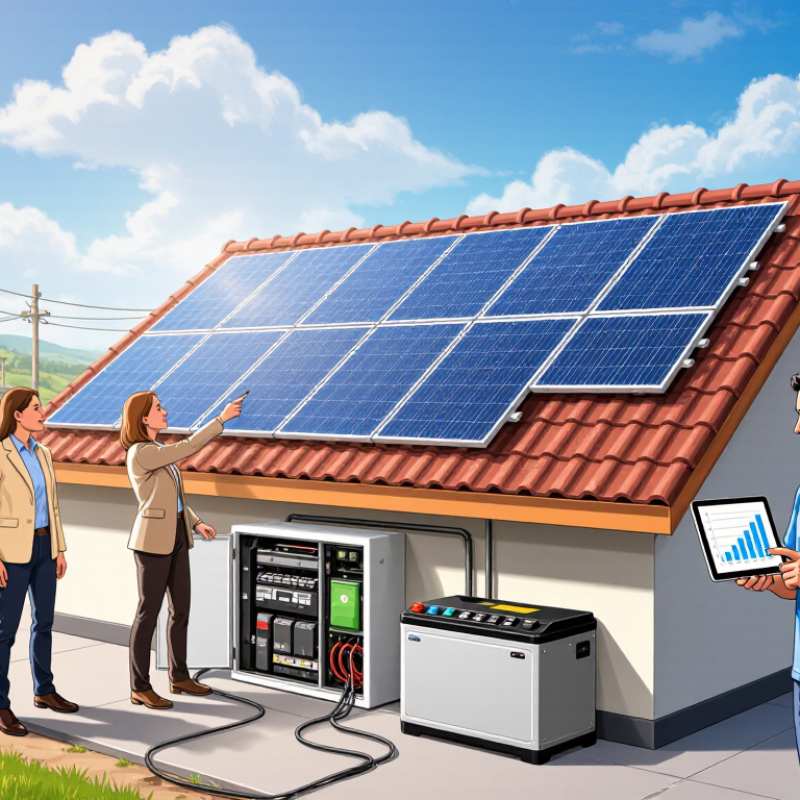
Understanding Renewable Energy Options for Buyers
Renewable energy buyers can choose rooftop solar, shared community projects, utility green-power plans, or on-site solar paired with batteries. Each option solves a different problem. Rooftop systems may suit owners with sunny, structurally sound roofs and daytime electricity use. Renters or shaded properties may need shared or utility-based programs instead. Check contract length, exit fees, billing terms, and whether the stated renewable supply is additional or simply matched through certificates. Details matter.
IRENA’s Renewable Capacity Statistics 2025 reports that global renewable power capacity reached 4,448 gigawatts at the end of 2024, after 585 gigawatts were added that year. That growth shows expanding supply, but it does not guarantee a good local deal. A buyer should compare the estimated system output with twelve months of actual bills, then check installation costs, maintenance, battery replacement, and grid connection requirements. The IEA’s Renewables 2024 report also highlights solar’s leading role in projected capacity growth through 2030. Still, forecasts are not a household savings estimate. A neat spreadsheet can miss roof repairs, seasonal shade, or changing electricity use. Ask for assumptions in writing, and question any payback estimate that ignores them.
10 Renewable Energy Solutions Tips for Buyers: Understanding Your Options
| Renewable Energy Option | Buyer Tip | Useful Performance Indicator | Best Suited For | Questions to Ask Before Buying |
|---|---|---|---|---|
| Rooftop solar photovoltaic (PV) | Review roof condition, shading, orientation, and local permitting before comparing system quotes. | Annual output is site-dependent; a broad planning range is about 800–1,800 kWh per installed kW per year. | Homes and businesses with suitable roof area and daytime electricity use. | What annual generation estimate is based on my roof, and what assumptions are used for shading and system losses? |
| Community solar | Check whether the project serves your utility area and understand subscription fees, cancellation terms, and bill credits. | Savings depend on the local credit structure, subscription price, and the amount of electricity allocated to you. | Buyers who cannot install panels on their own property. | Are bill credits guaranteed by the program, and can I leave without an early-termination fee? |
| Air-source heat pump | Compare a heat-loss assessment and seasonal performance estimate, not just the equipment’s headline rating. | Heat pumps can deliver multiple units of heat per unit of electricity; seasonal performance varies with climate, installation, and system design. | Buildings needing efficient space heating and, in many models, cooling. | Is the unit sized for my building, and will existing radiators or ducts work effectively with it? |
| Solar water heating | Compare the expected hot-water contribution with household use, roof conditions, and backup-heater requirements. | Output varies by climate, collector type, system size, and hot-water demand. | Properties with consistent hot-water demand and a suitable collector location. | What backup system is required, and how will the system perform during cloudy or cold periods? |
| Small wind turbine | Measure wind at the proposed hub height and check zoning, setbacks, noise rules, and maintenance access. | Energy production depends strongly on wind speed and turbine height; a short-term ground-level estimate is not enough. | Exposed rural or remote sites with a strong, consistent wind resource. | Is the production estimate supported by site-specific wind data and a documented power curve? |
| Battery storage | Size storage around the loads you want to back up or shift, and check whether it can operate during a grid outage. | Compare usable capacity in kWh, continuous power in kW, and round-trip efficiency; actual values depend on the product and operating conditions. | Solar owners seeking to shift energy use or provide selected backup power. | Does the quoted capacity mean usable or total capacity, and which circuits can run during an outage? |
| Ground-source heat pump | Request a site assessment that includes drilling or ground-loop design, access, and installation costs. | Seasonal efficiency depends on ground conditions, system design, and building heat demand. | Properties with adequate land or suitable access for ground loops and long-term heating needs. | What ground-loop type is proposed, and are drilling, restoration, and maintenance included in the quote? |
| Renewable electricity plan | Read how renewable generation is matched to your usage and how the supplier substantiates its claims. | Check the stated renewable share, certificate or tracking method, contract duration, and any price premium. | Renters and property owners who want a renewable electricity option without installing equipment. | What evidence supports the renewable claim, and can the rate change during the contract? |
| Micro-hydropower | Confirm year-round water flow, usable head, water rights, environmental rules, and connection requirements. | Potential output depends on both water flow and vertical drop (head); seasonal flow changes can affect generation. | Sites with a suitable flowing water source and the required legal permissions. | Has the water resource been measured across seasons, and are permits and fish-passage requirements addressed? |
| Biomass heating | Compare fuel availability, storage needs, maintenance, and local air-quality rules alongside equipment efficiency. | Useful heat depends on fuel moisture, appliance performance, and correct operation; combustion can produce local air pollutants. | Buildings with reliable access to appropriate biomass fuel and space for storage. | What fuel specification is required, how often does the system need servicing, and what emissions controls are included? |
Performance figures are indicative planning guidance, not guarantees. Actual output, savings, costs, and emissions depend on location, system design, usage, utility rules, and installation quality. Obtain site-specific assessments and compare the full installed cost and contract terms before purchasing.
Related Posts
-
10 Clean Energy Solutions Tips for Global Buyers
-

Why Power Solar Solutions Are Essential for Sustainable Energy Transition?
-
Exploring China Best Power Solar Solutions for Sustainable Energy?
-
China Top 10 Solar Solutions Suppliers for Global Buyers
-

China Top Solar Solutions Manufacturers for Global Buyers?
-
What Are Chinas Best New Solar Energy Solutions?
CORPORATE HEADQUARTERS
North America
California
AGIC Energy North America LLC
13025 Danielson Street, Suite 105
Poway, CA 92064 – USA
Phone Number: +1 (858) 842 1513
Email: info@site_cc52bd27-560c-4f9d-bd66-63718fc42539
Sales: sales@site_cc52bd27-560c-4f9d-bd66-63718fc42539