2026 Top Renewable Solutions for a Sustainable Future?
The urgency for sustainable solutions grows each day. Renewable solutions offer hope for our planet's future. As climate change escalates, many countries seek alternatives to traditional energy sources.
In 2026, innovations in solar, wind, and bioenergy may lead the way. For instance, new solar panels could become more efficient. Wind turbines could harness stronger gusts more effectively. These advancements reflect humanity's commitment to sustainability. Yet, challenges persist.
Many renewable solutions still lack widespread adoption. Costs can be high, and accessibility remains an issue. The transition requires thoughtful planning and community involvement. We must face these hurdles to realize a greener future. Each step we take matters, but we can do better. The journey is ongoing, and reflection is essential.
Top Renewable Energy Sources Driving Global Sustainability in 2026
The pursuit of renewable energy sources is essential for a sustainable future. In 2026, various energy options will lead global efforts. Solar energy, harnessed through advanced panels, offers a remarkable solution. These panels convert sunlight into electricity. They can be installed on rooftops and in vast solar farms. However, their production processes raise environmental concerns that we cannot ignore.
Wind energy presents another vital source. Turbines are popping up in both land and offshore locations. They capture wind currents and transform them into power. But, wind farms can disrupt local wildlife and landscapes. The trade-offs must be carefully considered. Additionally, hydropower holds promise but raises issues like ecosystem displacement.
Biomass energy, derived from organic materials, is gaining traction. It can reduce waste and provide energy. Yet, it often competes with food production, leading to ethical dilemmas. As nations adopt these renewable sources, a balanced approach is crucial. Each option comes with advantages and challenges that require deeper reflection. Understanding the complexity of these choices is key to building a truly sustainable future.
2026 Top Renewable Solutions for a Sustainable Future
| Renewable Energy Source |
Global Capacity (GW) |
Annual Growth Rate (%) |
CO2 Emissions Reduction (Million Tons) |
Investment (Billion $) |
| Solar Energy |
1,200 |
20 |
800 |
150 |
| Wind Energy |
700 |
15 |
500 |
120 |
| Hydropower |
1,100 |
5 |
600 |
80 |
| Biomass |
150 |
10 |
100 |
30 |
| Geothermal |
20 |
8 |
50 |
5 |
Projected Growth of Solar Power Capacity and its Impact on Carbon Emissions
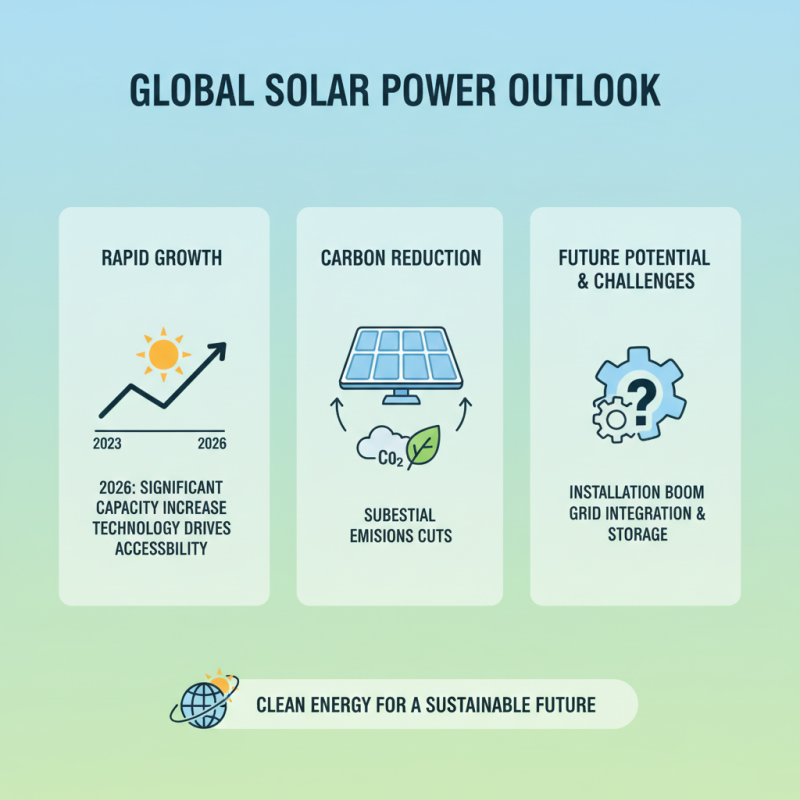
The projected growth of solar power capacity in the coming years is remarkable. As technology advances, solar energy is becoming more accessible. In 2026, we could see a significant increase in installations. The potential for solar panels to reduce carbon emissions is substantial. However, challenges remain.
While expanding solar capacity, some issues need attention. Not all regions receive the same sunlight, which affects efficiency. Maintenance of solar panels isn’t always straightforward. The lifespan of components can lead to waste. Additionally, the production of panels requires resources that impact the environment.
Nonetheless, the positive impacts can’t be overlooked. If properly managed, solar energy can lead to a drastic reduction in carbon output. Communities can benefit from cleaner air and lower energy costs. Future designs and policies must seek a balance. Embracing solar power offers hope, but it requires thoughtful implementation.
Wind Energy Innovations: Key Technologies Enhancing Efficiency by 2026
Wind energy has the potential to transform our approach to sustainable power. This transformation relies on innovative technologies. These advancements aim to enhance the efficiency of wind turbines significantly by 2026. Smart sensors are becoming more common. They help collect real-time data, making operations smoother and more responsive.
New blade designs are also in the spotlight. They can capture wind energy more effectively, even in low winds. These blades are often longer and lighter, maximizing energy generation. Efficiency boosts are crucial, but we shouldn't overlook construction practices. Better materials and lighter structures could reduce costs and environmental impact.
However, not all developments are flawless. There are challenges in recycling older turbines. Not all parts are easy to reuse. Addressing this issue is vital for sustainability. Innovations must consider the whole lifecycle of wind energy solutions. As we push for a greener future, reflection on these challenges can lead to better practices. Balancing efficiency with environmental responsibility is essential for genuine progress.
Wind Energy Innovations: Key Technologies Enhancing Efficiency by 2026
This chart illustrates the projected efficiency improvements in various wind energy technologies by 2026. The data reflects advancements in turbine design, materials, and energy conversion processes.
Role of Bioenergy in Achieving Net-Zero Goals: Statistics and Trends
Bioenergy is crucial for achieving net-zero goals. It produces energy from biological materials. This can include crops, waste, and even algae. The use of bioenergy can reduce greenhouse gas emissions significantly. Yet, there are challenges and concerns. Sourcing materials sustainably remains a complex task. Deforestation and land use changes can undermine benefits.
Recent trends show promising growth in bioenergy production. In 2021, bioenergy accounted for around 5% of global energy consumption. This illustrates the potential for expansion in the coming years. Biogas and biofuels have seen increased investment. However, the reliance on food crops for energy can raise ethical questions. Food security must balance with energy needs.
Innovative technologies are emerging for bioenergy. Advanced fermentation processes and waste-to-energy methods are on the rise. They can help harness energy from materials that would typically be discarded. Education and public awareness are essential for fostering sustainable practices. The road to a sustainable future is complex and requires ongoing reflection. Continuous improvement is key as we move forward in bioenergy development.
Hydrogen Economy: Potential Contributions to Renewable Energy Systems in 2026
The hydrogen economy holds significant promise for renewable energy systems in 2026. Hydrogen can be a clean fuel, as it produces only water when burned. This makes it an attractive option for reducing carbon emissions. Industries and transport can benefit from hydrogen. It can power vehicles and heavy machinery, contributing to cleaner air and a sustainable future.
Transitioning to a hydrogen economy will not be without challenges. Infrastructure development is crucial. We need more hydrogen refueling stations and storage facilities. Researchers are also investigating more efficient methods for hydrogen production. Electrolysis powered by renewable energy sources could be the key.
Tips: While exploring hydrogen options, consider local resources. Identify potential partnerships with research institutions. Collaboration will help address technical hurdles. Keep an eye on policy changes affecting renewable energy. Regulations can significantly influence hydrogen adoption. Understanding these aspects will enhance project success.