How to Choose the Best Air Cond Pump for Your Needs?
Choosing the right Air Cond Pump can be complex. Experts like John Smith, a seasoned HVAC technician, emphasize, “The right pump can drastically improve efficiency.” With various options available, how do you select the best one for your needs?
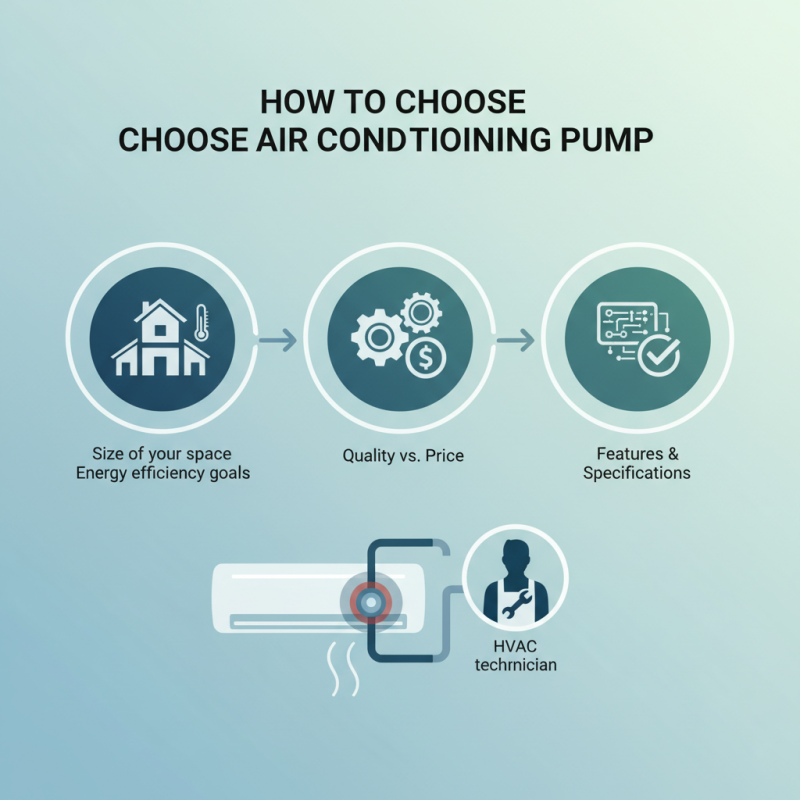
When considering an Air Cond Pump, one must assess specific requirements. Factors include the size of your space and your energy efficiency goals. An oversized pump can lead to energy waste. Conversely, a pump that’s too small may not effectively cool your area.
Many make the mistake of prioritizing price over quality. Investing in a reliable, efficient Air Cond Pump can result in long-term savings. Understanding your cooling needs is pivotal. Evaluate the features and specifications of each model. This informed approach will help ensure you make the best choice for your home or business.
Understanding the Basics of Air Conditioning Pumps
When selecting an air conditioning pump, it's essential to grasp the basics of how these systems work. Air conditioning pumps transfer refrigerant to cool or heat a space effectively. Understanding this process helps you make the right choice for your needs. A well-functioning pump ensures optimal system performance and energy efficiency.
Tips: Consider the size of your space. A pump that's too small will struggle to maintain comfortable temperatures. Also, take into account the noise levels. Some pumps may operate louder than others, which could be disruptive in quiet environments.
Choosing a pump also involves assessing the installation requirements. Some models may require professional installation, while others allow for DIY setups. Be realistic about your skills and the complexity of the installation. Ignoring these factors can lead to future frustrations and inefficiencies.
Tip: Always review warranty options. A solid warranty can offer peace of mind and protect your investment. Don’t overlook the importance of maintenance. Regular check-ups can prolong the life of your pump and prevent costly repairs. Make informed decisions based on your unique situation.
Identifying Your Specific Cooling Requirements
When selecting an air conditioning pump, identifying your specific cooling requirements is crucial. Begin by assessing the size of the space you need to cool. A larger area demands a more powerful pump, generally rated in BTUs (British Thermal Units). According to the U.S. Department of Energy, a pump needs around 20 BTUs for every square foot of living space.
Consider your climate too. In regions with high humidity, look for pumps that dehumidify effectively. The ASHRAE reports that maintaining indoor humidity between 30-50% enhances comfort and efficiency.
Tips: Always measure your space accurately. A pump too big can lead to rapid cycling, which wastes energy. Conversely, a pump too small may struggle to maintain the desired temperature. Assess insulation in your building as well. Good insulation reduces cooling load. Don't overlook noise levels. A quieter unit enhances comfort. Experts often stress that balancing efficiency, capacity, and noise can prevent future headaches.
Evaluating Different Types of Air Cond Pumps
When evaluating different types of air conditioning pumps, begin by understanding your environment. The choice of pump depends on factors such as humidity levels and space. For instance, a high humidity area requires a more robust pump to handle excess moisture.
Consider the capacity and efficiency of each pump. Some pumps may seem efficient but can consume high amounts of electricity. It's wise to research energy ratings. Many pumps come with built-in sensors to adjust performance based on conditions. This can lead to better energy savings.
**Tip:** Always read customer reviews. They provide insights into real-life experiences. You might discover issues that aren't mentioned in product descriptions.
Be aware of maintenance needs. Some pumps need frequent cleaning and checks, while others are more self-sufficient. If a pump is too complex, it may lead to frustration later on. This could mean investing more time and money.
**Tip:** Look for models with easy access for maintenance. Simplicity can prevent potential issues down the line.
In the end, the best air conditioning pump for you balances performance, ease of use, and durability. Ensure you reflect on your specific needs before making a decision.
How to Choose the Best Air Cond Pump for Your Needs? - Evaluating Different Types of Air Cond Pumps
| Type of Air Cond Pump | Efficiency Rating | Noise Level (dB) | Average Cost ($) | Best for |
| Ductless Mini-Split Pump | High | 30-50 | 1,200 | Small to Medium Rooms |
| Central Air Conditioning Pump | Medium | 50-70 | 3,000 | Whole House |
| Portable Air Conditioning Pump | Low | 40-60 | 500 | Temporary Use or Rooms |
| Window Air Conditioning Pump | Medium | 50-75 | 300 | Single Rooms |
Comparing Energy Efficiency and Performance Ratings
Choosing the right air conditioning pump involves understanding energy efficiency and performance ratings. The average pump uses about 2,000 kWh per year. This consumption can vary, depending on the size and type of the pump. Energy Star-rated models can cut energy use by 10-50%, significantly lowering utility bills.
Performance ratings, often represented as SEER or EER, reflect cooling efficiency. A higher SEER indicates better efficiency. For instance, a model with a SEER of 16 is 20% more efficient than one rated at 13. Recent studies reveal that energy-efficient pumps can result in annual savings of up to $400. However, these savings can be variable, depending heavily on local energy costs.
Consumer decisions also hinge on long-term costs versus initial investments. Some high-efficiency models have a steeper upfront price but pay off over time through reduced energy bills. It's crucial to analyze these aspects carefully. Sometimes, the cheapest option can lead to regret down the line, as maintenance and operational costs begin to add up. Choose wisely for comfort and savings.
Selecting the Right Size for Your Air Cond Pump
When selecting the right size for your air conditioning pump, several key factors should be considered. The size of your space is crucial. Measure the square footage of the area you want to cool. A larger space usually requires a more powerful pump. For instance, a studio apartment may need a 1.5-ton pump, whereas a larger home might need a 3-ton unit.
Moreover, the climate in your region impacts the pump size. Areas with high humidity levels may require more cooling power. If you live in a humid zone, choose a pump that can handle excess moisture efficiently. Insulation also plays a role. Well-insulated homes retain cool air better. This may allow you to choose a slightly smaller pump than you initially think.
It's also important to consider the layout of your space. Open floor plans may need more airflow considerations than closed-off rooms. Think about the placement of furniture and walls. Sometimes, even the smallest change can affect cooling efficiency. Evaluating these elements can prevent the frustration of underperformance or increased energy bills.
Air Conditioner Pump Size Selection Chart
This bar chart illustrates the recommended pump sizes in gallons per hour (GPH) for different air conditioner capacities (measured in BTUs). Selecting the right pump size is crucial for optimal performance and efficiency.