
How to Choose Home Energy Storage Solutions?
Choosing home energy storage solutions is no longer only a technical decision. It affects daily comfort, emergency readiness, electricity costs, and long-term household planning. A suitable system can keep essential lights, refrigeration, internet equipment, and medical devices running during an outage. However, the largest battery is rarely the best choice.
Every home has a different energy pattern. A family using induction cooking and air conditioning needs more power than a small apartment with modest evening demand. Review at least twelve months of electricity bills, then identify peak usage periods. Check the battery’s usable capacity, continuous output, round-trip efficiency, operating temperature, and expected cycle life. These details matter more than impressive marketing numbers.
Safety matters deeply.
Reliable home energy storage solutions should include certified components, battery management systems, clear installation instructions, and protection against overheating. A qualified installer can assess wiring, ventilation, roof conditions, local grid rules, and emergency shutdown requirements. Manufacturer warranties also deserve close attention. Read the coverage limits, performance guarantees, and service conditions carefully.
Solar compatibility may reduce grid dependence, but it does not automatically guarantee backup power. Some systems need additional equipment to operate during outages. Others cannot power large appliances simultaneously. This is where many comparisons become too simple. A lower purchase price may hide installation costs, software fees, or future battery replacement. Conversely, premium equipment may not suit a household with limited evening consumption.
The right decision balances safety, capacity, resilience, budget, and future energy needs. It should also leave room for uncertainty, because electricity prices and household habits can change. A careful evaluation creates a system that works beyond the brochure.
Define Your Household Energy Storage Needs
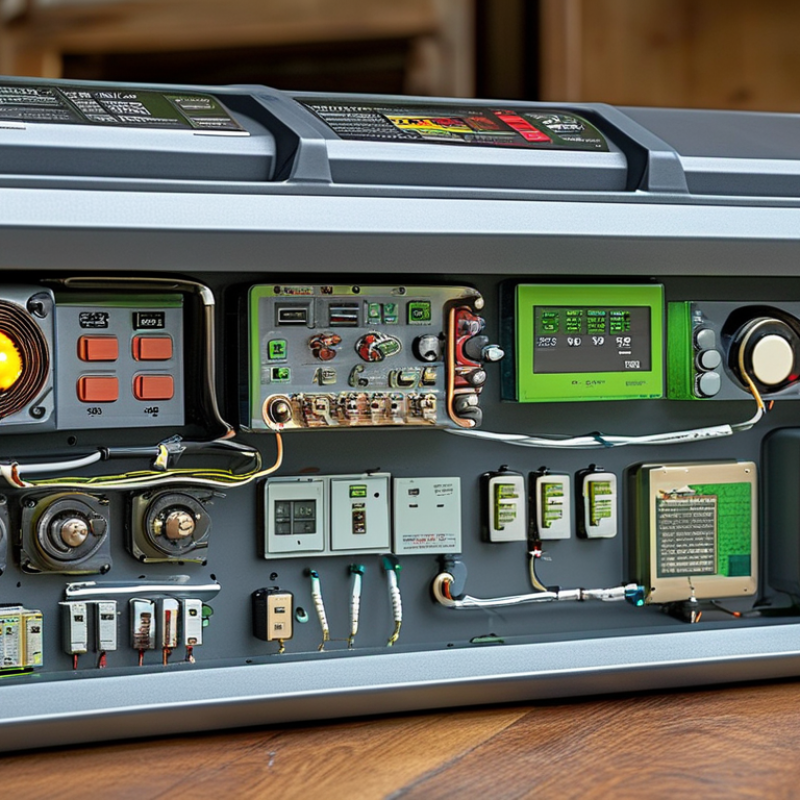
Defining your household energy storage needs starts with observing real electricity use. Review twelve months of utility bills, not just one high-demand month. Note daily consumption, evening peaks, and frequent outage periods. A winter heating day may require far more energy than a mild spring day. My first estimate was too optimistic because I ignored electric water heating. It was a useful mistake.
Separate essential loads from convenient ones. Refrigerators, medical equipment, internet devices, lights, and heating controls may need backup power. Ovens, pool pumps, and vehicle charging can often wait.
Write down each appliance’s running wattage and starting surge. A simple home energy monitor can reveal patterns that bills hide.
Size the system by usable capacity, continuous power, and backup duration. Ten kilowatt-hours may support basic loads overnight, but not an entire electric home. Ask how much capacity remains after reserve limits, temperature changes, and battery aging. A licensed installer should inspect the main panel, wiring, ventilation, and local connection rules. Request clear test results, safety certifications, warranty conditions, and maintenance requirements. The cheapest option may become expensive if it cannot start a pump or support cold-weather performance. Leave room for change. Your needs may grow with a heat pump, home office, or electric vehicle.
Compare Battery Technologies and System Configurations
How to Choose Home Energy Storage Solutions?
Battery technology affects safety, lifespan, usable capacity, and performance in different temperatures. Lithium iron phosphate batteries usually offer strong cycle life and stable thermal behavior. Nickel-manganese-cobalt batteries can provide higher energy density, but they require careful thermal management. Lead-acid systems cost less initially, yet they are heavier and usually need more frequent replacement. The cheapest option is not always economical. Check usable capacity, not just the advertised storage size.
System configuration matters just as much. An AC-coupled system can be added to an existing solar installation with less disruption. A DC-coupled system may reduce conversion losses and coordinate solar charging more efficiently. Hybrid inverters can manage solar panels, batteries, and grid power together, but compatibility must be verified. During a site assessment, measure evening loads, motor-starting demand, and critical circuits. A battery sized only for daily consumption may struggle during a power outage. My comparison would remain incomplete without considering installation space, ventilation, local electrical rules, and future expansion.
Tips: List essential loads, such as refrigeration, lighting, medical equipment, and communication devices. Ask for round-trip efficiency, warranty conditions, estimated cycle life, and tested safety certifications. Request a written design showing backup duration at winter demand. Small details matter. A flexible modular system may suit changing needs, although extra components can increase maintenance and cost.
How to Choose Home Energy Storage Solutions?
Comparison of common battery technologies using typical residential planning values
Lithium iron phosphate (LFP) generally offers high efficiency, long cycle life, and strong thermal stability, making it well suited to frequent daily cycling. Nickel-manganese-cobalt (NMC) batteries provide high energy density but typically have a shorter cycle life. Lead-acid systems have lower upfront cost but lower efficiency and usable depth of discharge. Sodium-ion technology is an emerging option with promising safety and cost potential. Actual performance depends on system design, temperature, operating limits, and battery management.
Evaluate Capacity, Power Output, and Efficiency
A home energy storage system should be sized around usable energy, not the number printed on its casing. Capacity is measured in kilowatt-hours, while power output is measured in kilowatts. A 10 kWh battery delivering 5 kW can theoretically run that load for two hours. In practice, inverter losses, temperature, and reserve settings reduce the result. The U.S. Department of Energy notes that usable capacity depends on depth of discharge and operating conditions.
Power output matters during short, demanding events. A refrigerator may need a brief startup surge, while an induction cooker can draw several kilowatts continuously. Check both continuous and peak ratings. A system with impressive capacity may still fail if its inverter cannot handle simultaneous loads. A simple load list helps. Include pumps, heating equipment, medical devices, and home networking equipment.
Efficiency shows how much stored electricity returns to the home. Lazard’s 2024 Levelized Cost of Storage report models lithium-ion systems with roughly 86–92% round-trip efficiency, depending on configuration. That means 8–14% may disappear during charging and discharging. My first sizing estimate was too optimistic because I ignored winter performance. It looked correct on paper. It was not. Leave practical headroom, compare measured usable capacity, and review warranty assumptions carefully.
Check Installation Requirements, Safety, and Compatibility
Choosing home energy storage starts with the installation site, not the battery capacity. Measure wall space, ventilation, clearances, floor strength, and flood exposure. Confirm whether the structure can support the equipment and cabling. A garage corner may look suitable, but heat, dust, and vehicle impact can change the risk.
Safety requirements deserve careful review. The International Energy Agency reported that global battery storage additions reached about 42 GW in 2023. Rapid growth makes installation quality more important, not less. Follow local electrical codes and recognized standards, including requirements for fire separation, emergency shutdown, and thermal monitoring. Keep smoke alarms accessible. Never place storage beside fuel, blocked exits, or sleeping areas. It sounds obvious.
Compatibility is often the hidden problem. Check voltage ranges, inverter limits, backup-load size, communication protocols, and solar input ratings. A storage unit may connect electrically but still operate poorly with an older inverter. Ask for documented test results, installation instructions, and maintenance intervals. The U.S. National Renewable Energy Laboratory commonly reports lithium-ion round-trip efficiency around 85% to 95%, but real homes may perform worse. Standby losses, cold temperatures, and oversized systems matter.
A qualified installer should inspect the main panel, grounding, service capacity, and backup circuits before quoting. I would question any proposal based only on monthly energy use. Household demand changes with seasons. Leave room for future loads, but avoid paying for unused capacity. A neat diagram cannot replace an honest site assessment.
How to Choose Home Energy Storage Solutions? - Check Installation Requirements, Safety, and Compatibility
| Storage solution | Typical usable capacity | Installation requirements | Safety considerations | Compatibility checks | Best suited for |
|---|---|---|---|---|---|
| AC-coupled battery system | Approximately 5–20 kWh per residential unit | Usually added to an existing solar installation; requires a dedicated circuit, suitable wall or floor space, and access to the main distribution board. | Provide clearances required by the installation manual; keep away from water, heat sources, and combustible materials. Use certified protection and professional commissioning. | Check inverter communication, grid-code settings, maximum AC current, backup-transfer equipment, and whether the existing system supports battery integration. | Homes that already have solar panels and want to add storage without replacing the existing solar inverter. |
| DC-coupled battery system | Approximately 5–30 kWh for common residential applications | Typically planned with a new solar-plus-storage system; requires compatible DC wiring, a hybrid inverter, battery protection, and adequate equipment-room space. | DC arc protection, correct polarity, battery disconnects, overcurrent protection, and controlled commissioning are essential. Do not mix modules outside approved configurations. | Verify battery voltage range, inverter charge/discharge limits, maximum photovoltaic input, communication protocol, and firmware compatibility. | New installations seeking efficient solar energy capture and coordinated control of solar generation and storage. |
| Lithium iron phosphate battery (LFP) | Commonly 5–15 kWh per modular battery unit | Requires a battery-management system, compatible inverter or charger, stable mounting, and installation within the permitted temperature and humidity range. | Generally offers good thermal stability, but it is still a high-energy battery. Install required disconnects, overcurrent protection, and smoke or heat detection where applicable. | Confirm nominal voltage, operating voltage window, continuous and peak current, communication wiring, grounding method, and approved module quantity. | Daily solar self-consumption, backup power, and applications requiring a modular battery with a long expected cycle life. |
| High-voltage battery system | Approximately 10–30 kWh for larger residential systems | Needs a purpose-built high-voltage inverter, insulated enclosures, restricted-access equipment area, and installation by qualified personnel. | Higher DC voltage increases shock and arc-flash risk. Use lockable isolation, warning labels, insulated tools, and the manufacturer’s prescribed emergency procedures. | Check the inverter’s battery-voltage range, startup voltage, maximum current, pre-charge requirements, and communication compatibility. | Homes with higher power demand, larger solar arrays, or a need to reduce conversion losses at higher power levels. |
| Low-voltage modular battery | Approximately 2–15 kWh per bank, depending on the approved configuration | Often simpler to handle than high-voltage equipment, but still requires correct fusing, cable sizing, ventilation or thermal control, and secure mounting. | High current can cause cable heating and fire if conductors or fuses are undersized. Follow torque settings, cable-length limits, and battery isolation requirements. | Confirm inverter battery voltage, maximum charge and discharge current, parallel-bank limits, busbar design, and battery-management communication. | Smaller homes, phased expansion, and systems where modular capacity growth is important. |
| Indoor-mounted battery | Commonly 5–20 kWh | Requires a dry, clean, structurally suitable location with manufacturer-specified working clearances and access for inspection and servicing. | Avoid bedrooms, escape routes, boiler rooms, and areas exposed to flooding unless local rules and the equipment rating specifically permit them. | Check enclosure rating, operating temperature, noise level, ventilation requirements, and compatibility with local electrical and fire-safety rules. | Properties with a suitable utility room, garage, or dedicated energy-equipment space. |
| Outdoor-rated battery | Commonly 5–30 kWh | Needs a level, non-flood-prone base, weather-protected location, suitable cable routes, and compliance with minimum separation distances. | Confirm the enclosure’s ingress-protection rating and permitted temperature range. Protect the unit from direct sunlight, snow accumulation, impact, and unauthorized access. | Verify outdoor operating limits, corrosion resistance, cable-gland rating, remote monitoring, and local planning or fire-access requirements. | Homes without adequate indoor space or locations where outdoor equipment access is easier. |
| Backup-capable energy storage | Usually 10–30 kWh, depending on essential loads and outage duration | Requires a backup gateway or transfer switch, an essential-loads panel, neutral and grounding assessment, and a defined load-management plan. | The system must isolate safely from the utility grid during an outage. High-demand loads such as electric heating, ovens, and vehicle chargers may need to be excluded or managed. | Check maximum backup power, motor-starting capability, unbalanced-load support, transfer time, generator interaction, and local interconnection rules. | Homes where maintaining refrigeration, lighting, communications, medical equipment, or other essential circuits during outages is a priority. |
Planning note: Actual capacity, clearances, protection devices, certifications, and installation methods vary by model and jurisdiction. Confirm the equipment documentation and local electrical, building, and fire-safety requirements before installation.
Assess Costs, Lifespan, Maintenance, and Warranty Terms
Choosing home energy storage starts with your electricity bill, not the battery brochure. Compare installed cost, usable capacity, round-trip efficiency, and expected cycling. The IEA’s 2024 Batteries and Secure Energy Transitions report records a 14% fall in lithium-ion pack prices during 2023. Installed home prices can still rise because of labor, inverters, permits, and electrical upgrades. Use a full year of hourly load data, rather than one summer bill.
Lifespan means more than calendar years. Ask for cycle life at a stated depth of discharge, temperature, and remaining capacity. NREL research shows heat and frequent cycling can accelerate battery degradation. Your results may differ. Warranty language deserves slow reading: check throughput limits, labor coverage, exclusions, transferability, and response times. A ten-year promise is weak if capacity falls below useful levels early. Maintenance may be modest, but inspections, software updates, ventilation, and inverter replacement still belong in the budget. My first estimate would probably be too optimistic.
Tips: Request three itemized quotes. Model a replacement in year fifteen. Check installer credentials and permit requirements. Ask what happens during an outage. Keep commissioning records and annual performance data. Read the warranty beside the sales proposal.
Related Posts
-
10 Best Green Energy Storage Solutions for a Sustainable Future
-
How to Choose the Best Home Energy Storage Solutions for Your Needs?
-

Top 10 Solar Solutions for Global Buyers in China?
-
Why Clean Green Energy Solutions Are Essential for a Sustainable Future
-
10 Essential Tips for Implementing Green Power Solutions Today
-
Top Renewable Power Solutions for a Sustainable Future?
CORPORATE HEADQUARTERS
North America
California
AGIC Energy North America LLC
13025 Danielson Street, Suite 105
Poway, CA 92064 – USA
Phone Number: +1 (858) 842 1513
Email: info@site_cc52bd27-560c-4f9d-bd66-63718fc42539
Sales: sales@site_cc52bd27-560c-4f9d-bd66-63718fc42539