How to Identify Muscovite Mica in Your Rock Samples?
muscovite mica is a common mineral found in many rock samples. Identifying it can be challenging, but it is rewarding. This article guides you through the process of recognizing muscovite mica effectively.
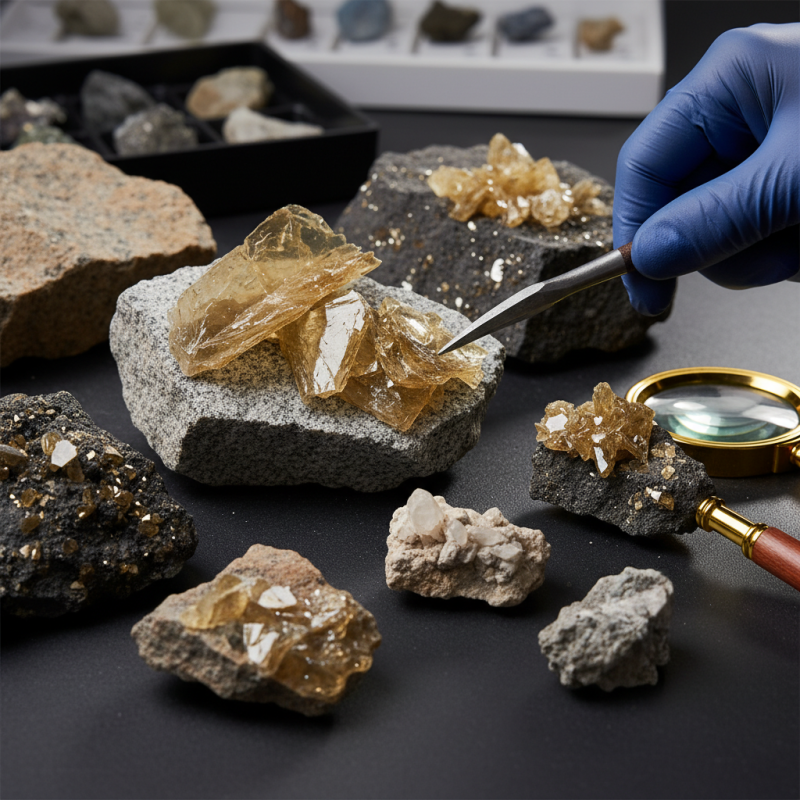
To start, muscovite mica appears as thin, shiny sheets. They often have a golden to colorless hue. You might notice its flexible and elastic nature when handling samples. These qualities help in identifying the mineral. Observing these features closely can enhance your identification skills.
In rock samples, muscovite mica often occurs alongside other minerals, which may complicate identification. Sometimes, it is present as small flakes, making it harder to notice. Pay attention to the crystal structure and cleavage. Mistakes can happen, and reflection on your findings is essential. By practicing, you can improve your identification techniques over time.
Identification of Muscovite Mica: Key Physical Properties
Muscovite mica is a fascinating mineral found in various rock samples. To identify it, focus on several key physical properties. Muscovite is known for its shiny, flaky appearance. Its sheets can be easily peeled apart. This characteristic is a major clue. When light hits its surface, muscovite sparkles, giving it an appealing luster.
Another important feature is its color. Muscovite usually appears as a light-colored mineral, commonly in shades of pale yellow, green, or colorless. It can sometimes exhibit a silvery hue. The transparency of muscovite is notable too. You can often see through thin pieces, which is not the case with many other minerals.
Hardness is also a factor. On the Mohs scale, muscovite ranks around 2.5 to 3. It can be scratched easily with a fingernail, making it less resilient than harder minerals. However, in some samples, it may be confused with other micas, leading to errors in identification. Gaining experience with various physical attributes is key for accurate identification. Search for those sparkling sheets and observe closely.
How to Identify Muscovite Mica in Your Rock Samples? - Identification of Muscovite Mica: Key Physical Properties
| Property | Description | Typical Values |
| Color | Muscovite typically exhibits a light color, often colorless to pale yellow or brown. | Colorless, pale yellow, pale brown |
| Luster | Muscovite has a vitreous to pearly luster. | Vitreous, Pearly |
| Cleavage | Muscovite exhibits perfect basal cleavage allowing it to split into thin sheets. | Perfect Basal Cleavage |
| Hardness | Muscovite is relatively soft, which can be scratched by a fingernail. | 2.5 to 4 on Mohs Scale |
| Transparency | Muscovite can be transparent to opaque depending on thickness. | Transparent to Opaque |
Utilizing Optical Properties for Muscovite Mica Identification
Identifying muscovite mica can be fascinating but requires careful analysis. Muscovite is a silicate mineral known for its optical properties. It appears as thin, flaky sheets, often transparent or translucent. These characteristics allow it to reflect light beautifully. A good place to start is by observing the rock sample under light.
Using a polarized light microscope can enhance your identification process. Muscovite typically shows distinctive pleochroism. This means it changes color with different viewing angles. Observing this property can be a quick way to confirm muscovite presence. According to the Geological Society, over 80% of professionals rely on such optical tests for identification.
It’s essential to keep in mind that not all clear minerals are muscovite. Some may be other micas or similar silicates. Each mineral has unique light response properties. Confusion may arise, especially in samples with multiple minerals. Additionally, sometimes samples can be impure, affecting optical readings. Thorough examination is key. Always ponder whether a finding aligns with known characteristics.
Chemical Composition Analysis of Muscovite in Rock Samples
Identifying muscovite mica in rock samples involves a careful chemical composition analysis. Muscovite is a member of the mica group and predominantly consists of potassium aluminum silicate. Its chemical formula is KAl₂(AlSi₃O₁₀)(OH)₂. This means it contains two aluminum atoms, three silicon atoms, and potassium.
When analyzing rock samples, focus on a few key elements: potassium (K), aluminum (Al), silicon (Si), and hydroxide (OH). A study published in the Journal of Mineralogy found that muscovite typically contains about 6.5% potassium. This percentage can be a distinct marker when differentiating muscovite from other micas. Each sample should be evaluated using X-ray diffraction or electron microprobe analysis to accurately assess these components.
Despite the effectiveness of these methods, there can be complications. Some samples may contain impurities that skew results. It is also essential to consider the sample's history and geological context. Heritage factors can impact the mica's formation. Muscovite's characteristics can slightly vary based on its environment. By understanding these details, one can enhance the identification process of muscovite in rock samples.
Field Testing Techniques for Identifying Muscovite Mica
Identifying muscovite mica in rock samples can be challenging, yet essential for geologists and hobbyists alike. Field testing techniques are vital for precise identification. Start by observing the sample's color and shine. Muscovite typically shows a light color, ranging from silvery white to pale green. This distinguishes it from other minerals.
One effective field test is the cleavage check. Muscovite has perfect basal cleavage, allowing it to split into thin sheets easily. Use a hand lens to inspect the edges of the sample. The thin, flexible sheets indicate the presence of muscovite. Remember, not all shiny materials are mica.
Tips: Always carry a rock hammer. You may need to break samples to see the cleavage better. Pay attention to the rock's surroundings. Muscovite often appears in metamorphic rocks, especially schists. Another crucial point is to note the crystal form. The thin, flexible sheets of muscovite may resemble other minerals, like biotite. If in doubt, refer to field guides or mineral databases for confirmation.
Field tests aren't foolproof. Certain conditions can mislead you. Be open to re-evaluating your results. Consider bringing in a more experienced geologist for a second opinion. This practice fosters a deeper understanding of mineral identification.
Comparison with Other Mica Types: Differentiating Characteristics
Muscovite mica is a common mineral found in many rock samples. It has a distinctive appearance that sets it apart from other mica types. Muscovite is usually light-colored, often golden or silver. Its perfect cleavage allows it to break into thin, flexible sheets. This property makes it a popular choice in various applications.
In comparison, biotite mica is darker, typically black or brown. Biotite tends to be thicker and less flexible than muscovite. Another type, phlogopite, appears in shades of brown and often contains magnesium. Distinguishing these micas requires careful observation of color and texture.
Tips: When you examine rock samples, start by noting the color and luster. Use a hand lens to check for cleavage. Looking for transparency can also help you identify muscovite.
Keep in mind that rocks can be complicated. Muscovite might not always shine bright. Some samples may appear dull due to weathering. Always document your findings for later comparison. This can help you refine your identification skills.