China Top Green Power Energy Solutions Manufacturers?
China has become a major manufacturing base for green power energy solutions. Its suppliers produce solar modules, inverters, battery systems, wind equipment, and integrated microgrids. However, factory scale alone does not prove reliability. Buyers need evidence from operating projects, not only polished brochures.
This guide examines China’s leading manufacturers through practical and technical criteria. It considers product efficiency, manufacturing experience, quality controls, certifications, warranty terms, and service capacity. A factory roof with stable solar output tells a different story than a laboratory claim. A coastal battery project also reveals how equipment handles humidity, salt air, and repeated charging cycles. These details matter.
The meaning of “top” can change.
Some companies excel at high-volume production. Others provide stronger engineering support for complex sites. A smaller supplier may offer faster communication, yet lack international service teams. That trade-off deserves honest attention. This article compares manufacturers with a balanced approach, using available company records, project information, and customer-facing documentation. It also encourages readers to verify current certifications and performance data independently.
Energy projects involve long operating periods. The cheapest quotation may create higher maintenance costs later. Reliable suppliers explain system limits, replacement procedures, and expected output without hiding uncertainty. The strongest manufacturers usually combine tested equipment with responsive technical support. Still, no supplier fits every project. Site conditions, grid requirements, financing, and local regulations must shape the final decision. Careful evaluation remains essential.
Defining Green Power Energy Solutions in China
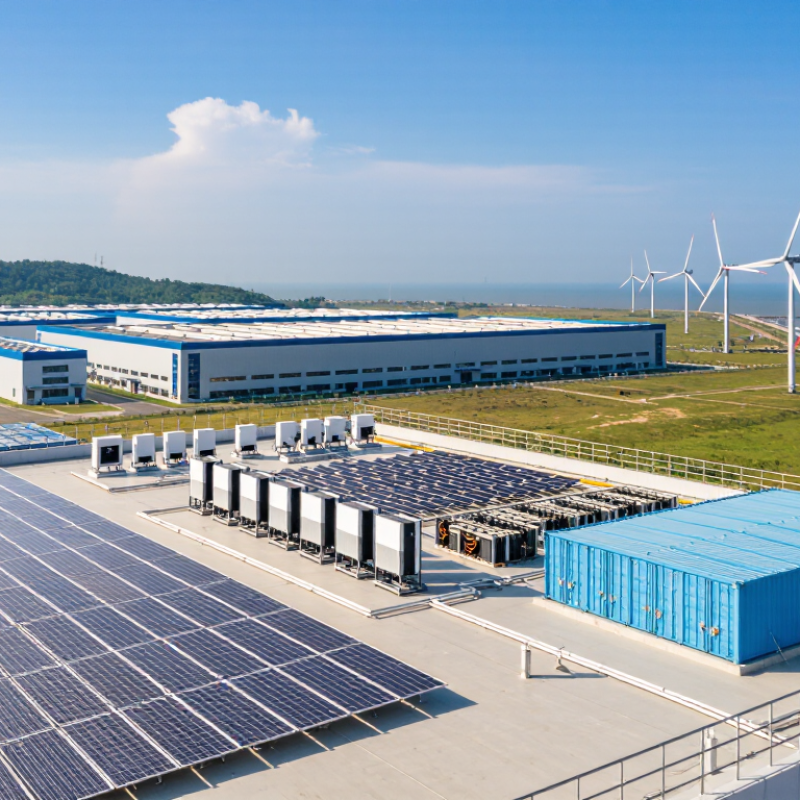
China’s green power energy solutions combine renewable generation, storage, grid control, and verified electricity procurement. They are not limited to solar panels or wind turbines. A factory rooftop, battery container, smart meter, and power purchase contract may operate as one system.
The scale is substantial. IRENA’s Renewable Capacity Statistics 2024 recorded about 297 gigawatts of renewable capacity added in China during 2023. That represented roughly 63% of global renewable additions. The International Energy Agency expects China to deliver nearly 60% of worldwide renewable capacity growth through 2030. These figures show manufacturing strength, but capacity alone does not prove reliable performance.
Practical evaluation should examine efficiency, storage duration, grid compatibility, maintenance access, and emissions data. China’s National Energy Administration reported rapid growth in renewable installations and green electricity trading in 2024. Buyers should also verify green electricity certificates and project boundaries, rather than trusting vague “low-carbon” claims. A battery beside a solar array can smooth midday output for evening production, yet its materials and replacement cycle still require assessment. This is where the industry remains imperfect. Some suppliers publish impressive output figures but provide limited lifetime data. Independent testing, transparent warranties, and measured operating records matter more than a polished brochure.
China Top Green Power Energy Solutions Manufacturers? - Defining Green Power Energy Solutions in China
| Solution Category | Manufactured Equipment | Typical Technical Scope in China | Main Applications | Relevant Standards or Requirements | Why It Is Considered Green Power |
|---|---|---|---|---|---|
| Solar Photovoltaic Power | PV cells, crystalline-silicon modules, inverters, mounting systems and monitoring equipment | Utility-scale, commercial rooftop, residential rooftop and agrivoltaic configurations | Solar farms, factories, warehouses, public buildings and distributed generation projects | IEC 61215 for PV module design qualification; IEC 61730 for module safety; grid-connection rules issued by Chinese authorities | Generates electricity without direct combustion emissions during operation and can be installed close to electricity loads |
| Wind Power | Wind turbines, blades, generators, converters, towers and condition-monitoring systems | Onshore and offshore wind systems, including equipment for high-altitude and low-wind-speed locations | Large renewable-energy bases, coastal projects, industrial power supply and hybrid wind-solar plants | IEC 61400 series for wind-turbine design, testing and performance assessment | Uses kinetic energy from wind and produces electricity without fuel combustion during normal operation |
| Battery Energy Storage | Lithium-ion battery systems, battery-management systems, power-conversion systems, thermal-management units and containers | Utility-scale storage, commercial and industrial storage, renewable-energy shifting and microgrid storage | Peak shaving, frequency regulation, backup power, renewable integration and grid congestion management | GB/T 36276-2023 for lithium-ion battery energy-storage systems; fire-safety, electrical-safety and grid-connection requirements also apply | Improves the utilization of variable renewable electricity and reduces curtailment when properly operated |
| Hydrogen Energy | Electrolyzers, hydrogen compressors, storage systems, dispensers and fuel-cell power equipment | Renewable-powered hydrogen production, industrial hydrogen supply and integrated energy projects | Chemical processing, steelmaking, heavy transport, backup generation and long-duration energy storage | Hydrogen purity, pressure-vessel, electrical-safety and hazardous-area requirements; applicable ISO and Chinese GB standards | Can convert renewable electricity into a storable energy carrier when the hydrogen is produced using low-carbon electricity |
| Smart Grid and Energy Management | Energy-management software, smart meters, power-quality devices, sensors, controllers and virtual-power-plant platforms | Real-time monitoring, demand response, distributed-energy coordination and load forecasting | Industrial parks, commercial buildings, data centers, microgrids and distributed renewable systems | Cybersecurity, data-protection, interoperability and power-grid communication requirements; ISO 50001 supports energy-management systems | Reduces unnecessary consumption and enables flexible coordination between renewable generation, storage and demand |
| Electric Vehicle Charging | AC chargers, DC fast chargers, charging cabinets, charging connectors and charging-management systems | Residential, workplace, public, highway and fleet-depot charging infrastructure | Passenger vehicles, buses, logistics fleets, electric trucks and battery-swapping support facilities | GB/T 18487.1 for conductive charging systems and GB/T 20234 series for charging connection interfaces | Supports the replacement of fossil-fuel vehicle use with electricity, with greater environmental benefits when supplied by renewables |
| Industrial Energy Efficiency | High-efficiency motors, variable-frequency drives, industrial heat pumps, waste-heat recovery systems and efficient power supplies | Energy-saving upgrades for factories, buildings, process lines and district-energy systems | Manufacturing, food processing, chemical production, cold chains, commercial buildings and industrial parks | China energy-efficiency limits and testing standards, together with ISO 50001 energy-management practices | Cuts electricity and fuel demand, lowers operating emissions and improves the effectiveness of renewable-power consumption |
Definition: In China, green power energy solutions generally combine renewable electricity generation, energy storage, grid flexibility, electrification and energy-efficiency technologies. The environmental benefit depends on equipment life-cycle impacts, electricity source, operating conditions, recycling practices and compliance with applicable safety and grid-connection requirements.
Related Posts
-
Top 10 Renewable Power Solutions for Global Buyers
-
Top 10 Types of Clean Green Energy Solutions for Buyers
-
How to Choose Green Power Solutions for Your Business?
-
China Top Green Renewable Energy Solutions Suppliers?
-
Top Types of Sustainable Energy Solutions for Global Buyers
-
Why Choose Power Green Energy Solutions for Global Sourcing?
CORPORATE HEADQUARTERS
North America
California
AGIC Energy North America LLC
13025 Danielson Street, Suite 105
Poway, CA 92064 – USA
Phone Number: +1 (858) 842 1513
Email: info@site_cc52bd27-560c-4f9d-bd66-63718fc42539
Sales: sales@site_cc52bd27-560c-4f9d-bd66-63718fc42539