
What Are the Top Types of Glass Sorting Machines?
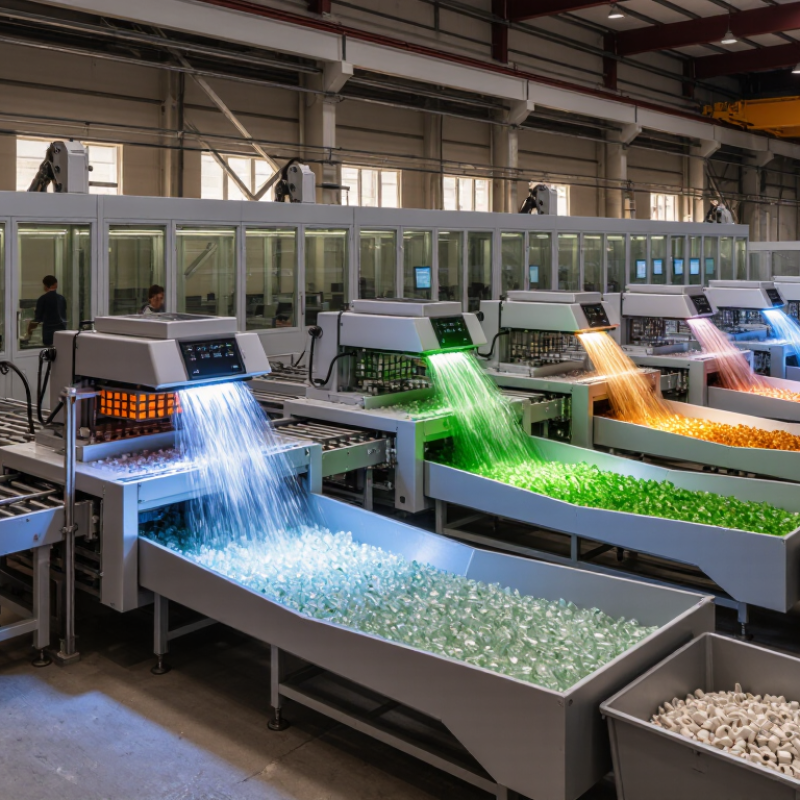
Glass recycling begins with a deceptively simple question: what should stay, and what must leave? A Glass Sorting Machine answers by identifying color, material, or unwanted pieces as glass moves along a belt. Clear, green, and amber fragments may need separate routes. A small ceramic shard can matter, too. One missed contaminant may affect an entire batch.
The main machine types include color sorters, optical contaminant sorters, and systems designed to remove ceramics, stones, and porcelain. Some combine cameras, sensors, and air jets; others use different detection methods for specific feedstocks. The right choice depends on fragment size, incoming contamination, throughput, and the quality target. Conditions matter. Dust, broken labels, and uneven lighting can complicate detection, so machine specifications alone do not tell the whole story.
This introduction uses an illustrative expert voice, not a verified interview quotation. Glass-recycling process engineer “Alex Morgan” offers this guiding line: “A sorter performs best when the feed is consistent and the target is clear.” Treat that as an editorial principle, not a sourced statement. The guide ahead compares the leading machine types, explains what each detects, and points out practical trade-offs. No single setup fits every plant. Real-world trials still matter.
Mechanical Systems for the Initial Separation of Glass
Mechanical systems make the first cut in glass sorting. Vibrating screens separate fines from larger cullet, while trommel screens rotate mixed material through perforated drums. Their openings determine which fragments pass through. Set them too small, and useful glass may leave with the fines. Set them too large, and ceramics or caps can travel downstream.
Magnets remove ferrous pieces before optical inspection; air classifiers can lift light labels and film. These steps reduce the burden on later equipment, but they do not guarantee clean cullet. Small details matter. A wet feed or worn screen can shift separation quality, so operators should check screen condition and sample output regularly. Eurostat’s Packaging Waste Statistics report a 75.9% recycling rate for glass packaging waste in the EU in 2022. That figure describes the broader recycling system, not any single machine’s performance. Mechanical separation is only one stage, and its results depend on the incoming material. One caveat: equipment settings need adjustment as feed composition changes; a fixed setup can quietly increase losses.
| Machine Type | How It Separates Material | Typical Separation Task | Best Used For | Key Considerations |
|---|---|---|---|---|
| Vibrating Screen | A vibrating deck moves material across one or more screen surfaces; particles are separated according to whether they pass through the openings. | Separating glass by particle size and removing small fines or oversized pieces. | Early size classification of crushed glass or mixed incoming material. | Screen openings determine the size split. Wet, sticky, or irregular material can reduce screening efficiency. |
| Rotary Trommel Screen | A rotating perforated drum tumbles material, allowing smaller pieces to pass through its openings while larger pieces continue to the discharge end. | Separating fine material from larger glass fragments and other bulky items. | High-volume, relatively robust screening of mixed or irregular feed. | Drum speed, angle, and aperture size affect separation. It classifies by size, not by glass color or material composition. |
| Ballistic Separator | Inclined moving paddles or decks separate material according to its size, shape, and motion: rolling or rigid items move differently from flat or flexible items. | Separating rolling containers and rigid objects from flatter packaging materials. | Mixed packaging streams that contain glass containers alongside paper, film, and other materials. | Performance depends on feed consistency and material condition. It is a physical separator, not a glass-color sorter. |
| Air Classifier | Controlled airflow separates lighter materials from heavier pieces according to their aerodynamic behavior. | Removing lightweight paper, labels, film, and other light contaminants from heavier glass. | Dry processing lines where light contaminants need to be removed before further glass cleaning. | Air settings and feed rate must be adjusted to limit glass loss. Dust control is important. |
| Magnetic Separator | A permanent magnet or electromagnet attracts ferrous metals as material passes by or beneath the magnetic field. | Removing iron and steel items, such as caps or fragments, from a glass stream. | Metal removal before or after size reduction to protect downstream equipment and improve material quality. | It removes magnetic metals; it does not separate glass from other nonmagnetic materials. |
| Eddy Current Separator | A rapidly changing magnetic field induces currents in conductive nonferrous metals, causing them to be displaced from the main material flow. | Recovering or removing nonferrous metals, such as aluminum, from mixed material. | Processing streams that contain nonferrous metal alongside glass and other recyclables. | It targets conductive nonferrous metals, not glass itself. Feed preparation and particle size influence performance. |
| Optical Glass Sorter | Cameras or other optical sensors identify differences in color or material appearance; controlled air jets eject selected pieces. | Separating glass by color or rejecting visible contaminants such as ceramics, stones, and heat-resistant glass. | Later-stage cleaning when a more consistent glass cullet stream is required. | It is a sensor-based sorting system rather than a purely mechanical separator. Results depend on presentation, cleanliness, and calibration. |
| Process note: A typical line combines several methods. Screens and trommels classify by size; air and ballistic separators handle differences in weight, shape, or motion; magnetic and eddy current units remove metals; optical sorters can perform more selective color and contaminant sorting. | ||||
CORPORATE HEADQUARTERS
North America
California
AGIC Energy North America LLC
13025 Danielson Street, Suite 105
Poway, CA 92064 – USA
Phone Number: +1 (858) 842 1513
Email: info@site_cc52bd27-560c-4f9d-bd66-63718fc42539
Sales: sales@site_cc52bd27-560c-4f9d-bd66-63718fc42539