What is a vehicle power inverter and how does it work?
The vehicle power inverter has become essential for modern road travel. It converts DC power from a vehicle's battery to AC power. This allows drivers to use household appliances and charge devices on the go. Industry experts predict a steady growth in demand for vehicle power inverters. A prominent expert, Dr. Jane Smith, states, "The versatility of vehicle power inverters is redefining road trips."
Data from the Global Market Insights report indicates a projected growth rate of 7.5% in this sector over the next five years. As more gadgets are integrated into our daily lives, the need for reliable power sources increases. Many travelers find themselves unprepared for power outages or low batteries during long trips.
Despite advancements, challenges remain. Not all vehicle power inverters are created equal. Some models may struggle with higher wattage demands, causing frustrations. Proper selection and understanding of models are vital for optimal performance. The balance between convenience and system limitations can be tricky. Vehicle power inverters shape our travel experiences in ways we are still exploring.
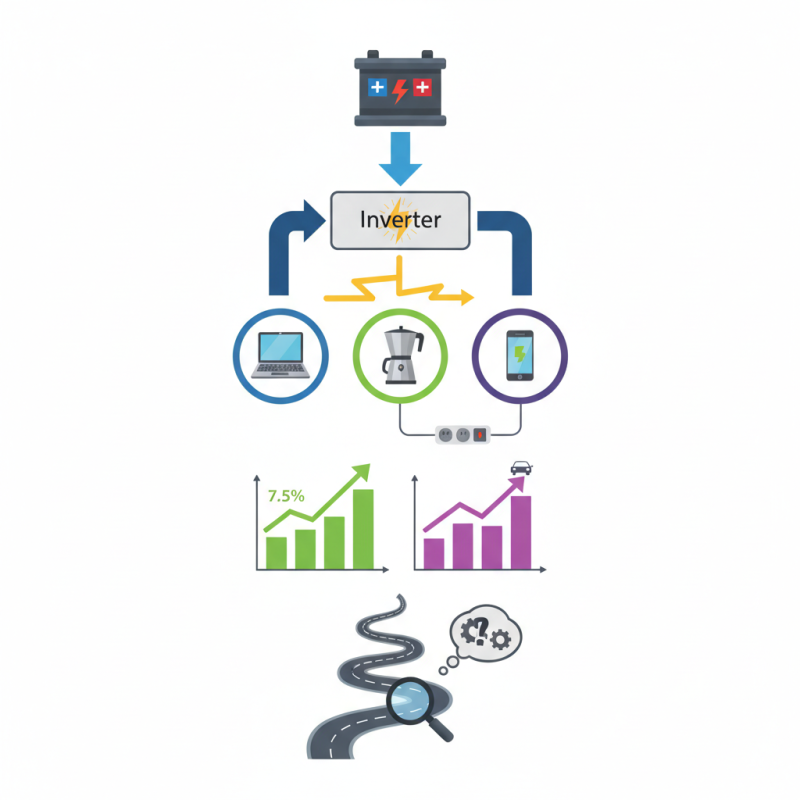
What is a Vehicle Power Inverter?
A vehicle power inverter is a device that converts direct current (DC) from a car battery into alternating current (AC) power. This conversion allows various electronic devices to run while you are on the road. Inverters come in different sizes and capacities, with some able to deliver over 3000 watts of power. This makes them suitable for charging laptops, running microwaves, or even powering small refrigerators.
According to a recent market report, the demand for power inverters is growing rapidly. By 2025, the global market for inverters is expected to exceed $15 billion. More drivers are looking for options that enable them to use appliances on road trips or during emergencies. However, there's a catch. Many inverters may not provide stable power, leading to potential damage to sensitive electronics. Users often find themselves frustrated with unreliable devices that fail when needed the most.
Installation can also be tricky. Not every vehicle is equipped with the necessary wiring or battery capacity. Many people underestimate the energy needs of their devices, which can lead to inadequate power supply. This may result in malfunctioning devices or, worse, draining the car battery. It's essential to evaluate how much power is required before investing in an inverter.
Types of Vehicle Power Inverters
When it comes to vehicle power inverters, you can find several types, each serving a unique purpose. One common type is the modified sine wave inverter. This model is often more affordable and works well for basic devices. It changes the DC power from your vehicle battery into AC power, but it may not be suitable for sensitive electronics. These devices sometimes produce a buzzing sound, which can be annoying.
Another type is the pure sine wave inverter. This is a more advanced model. It generates clean and stable AC power, making it ideal for sensitive gadgets. Many campers prefer this for running appliances like small refrigerators or laptops. However, these inverters are generally more expensive. Not everyone can justify the cost if they only use it occasionally.
Consider the inverter's capacity as well. Some people might underestimate their power needs. They buy an inverter that can't support multiple devices. This can lead to frustrating situations, like a device shutting down mid-use. Choosing the right type involves weighing your power requirements against your budget. Think carefully about what you need before making a decision.
How a Vehicle Power Inverter Works
A vehicle power inverter is a crucial device that converts DC power from the car’s battery into AC power. This conversion enables the use of household appliances in your vehicle. For instance, you can plug in a laptop or a small fridge during long trips. According to the Department of Energy, nearly 30% of battery energy can be efficiently utilized with a quality inverter.
Understanding how a vehicle power inverter works requires looking at its components. The inverter uses a transformer to increase voltage and an oscillator to convert DC to AC. Many inverters feature cooling fans to prevent overheating, which is essential. However, not all inverters handle high loads well. An inverter's capacity could be undersized for the equipment used. In these cases, performance drops, and the inverter may fail.
Proper installation and usage are vital for safety and functionality. Overloading the inverter can lead to significant issues. Reports indicate that nearly 12% of vehicle breakdowns are related to power systems. It’s crucial to match the inverter's power rating with your needs. Many users overlook this detail, leading to discomfort on the road. Always consider these factors before connecting your devices.
Applications of Vehicle Power Inverters
Vehicle power inverters are versatile devices that convert DC power from a car's battery into AC power. This is essential for powering various electronic devices while on the go. Their applications are wide-ranging. Many travelers use these inverters to charge laptops or run small appliances during road trips. Camping enthusiasts enjoy the comfort of having lights or heating equipment powered by the vehicle.
Inverter use also extends into emergency situations. When the power goes out at home, an inverter can provide a reliable source of energy. This allows for the continued use of refrigeration and communication devices. However, the size of the battery and inverter capacity become important factors. Not all vehicles can handle high power demands efficiently. Incorrect usage can lead to battery drainage or device malfunction.
People often underestimate the importance of knowing how much power you need. This can create frustrating situations. If too many devices are plugged in, it may cause the inverter to shut down. It's vital to check the wattage and compatibility of devices you intend to use. Planning ahead with a clear understanding will result in a smoother experience.
Benefits and Limitations of Vehicle Power Inverters
Vehicle power inverters are useful tools that convert DC power from a car battery into AC power. This enables devices like laptops and small appliances to be powered while on the go. However, they come with benefits and limitations that users should consider.
One major benefit of vehicle power inverters is their versatility. You can charge multiple devices simultaneously, making road trips more convenient. They provide a reliable power source, especially in remote areas. However, the power draw can strain a vehicle's battery. If you run an inverter for too long, your car may not start.
Another limitation is efficiency. Not all inverters are designed equally, and some waste energy during conversion. Users might find that their devices charge slowly or not at all if the inverter is underpowered. Additionally, having too many gadgets plugged in can cause circuit overloads. It’s essential to understand the inverter's limits before usage. Balancing convenience with power management can be tricky. Users need to reflect on their energy needs carefully.