
What Are the Best China Renewable Storage Solutions?
China’s renewable build-out is reshaping how electricity is generated, transmitted, and stored. The International Energy Agency’s Renewables 2024 report expects China to deliver nearly 60% of global renewable capacity additions through 2030. That scale creates a practical challenge: solar output peaks at midday, while demand often rises after sunset.
Storage must bridge that gap.
The National Energy Administration reported that China’s new energy storage capacity reached 31.39 GW by the end of 2023, excluding pumped-storage hydropower. Its cumulative storage volume reached 66.87 GWh. These figures show rapid deployment, but they do not automatically prove economic success. Battery duration, grid connection, safety management, and electricity-market access still determine project value.
This is where renewable storage solutions become more specific than a simple battery purchase. Lithium-ion systems can support fast frequency response and evening peak shifting. Flow batteries may suit longer-duration applications, although their commercial scale remains smaller. Pumped storage offers high capacity and long operating life, but requires suitable terrain, water resources, and lengthy construction periods.
The China Energy Storage Alliance has highlighted continued growth in electrochemical storage, while industry data also points to falling battery costs and intense manufacturing competition. Lower prices help developers.
They also create pressure.
A reliable solution should match storage duration with local demand, renewable output, and grid conditions. This article examines China’s leading technologies, including batteries, pumped storage, thermal storage, and hydrogen-related options. It also considers a difficult question: is the fastest-deployed technology always the most suitable one? The answer depends on measurable performance, lifecycle costs, safety records, and transparent evidence rather than impressive capacity announcements.
Defining Renewable Energy Storage Solutions in China
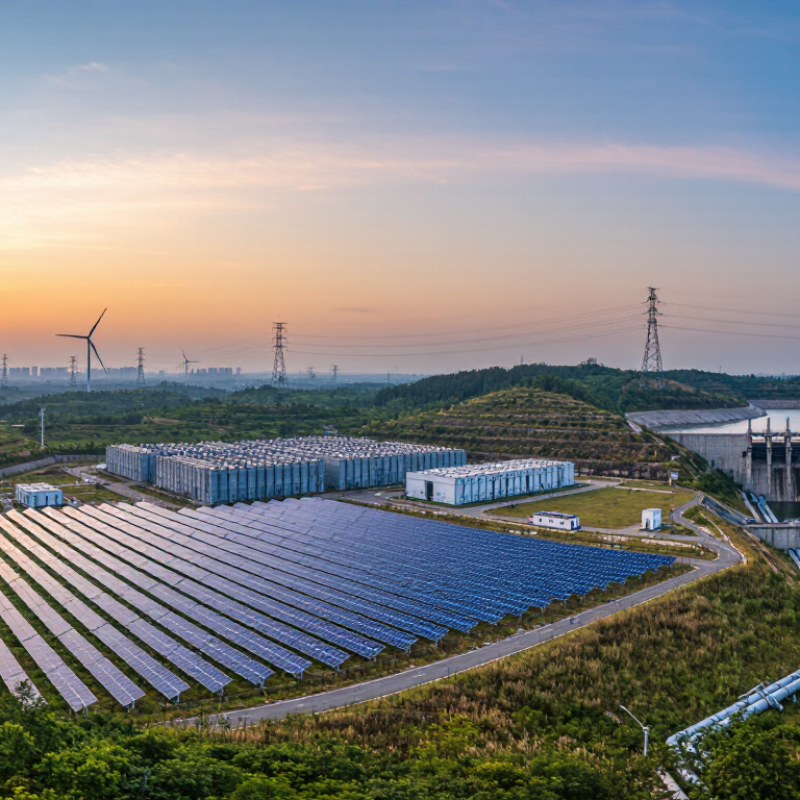
China’s renewable energy storage solutions are systems that capture surplus wind and solar power, then release it when generation falls. They include batteries, pumped-storage hydropower, flow batteries, and thermal storage. The “best” option depends on duration, location, grid needs, and safety requirements.
China’s National Energy Administration reported 73.76 GW of new-type energy storage capacity by the end of 2024. Most projects used lithium-ion batteries, often providing two to four hours of discharge. The IEA’s Renewables 2024 report expects China to deliver nearly 60% of global renewable capacity expansion through 2030. These figures show scale, but not complete performance. A large capacity figure can hide weak utilization, curtailment, or limited project revenue.
A practical storage site needs more than battery racks. It requires a power-conversion system, energy-management software, thermal monitoring, fire protection, and clear recycling plans. A coastal solar project may need short-duration batteries for evening peaks. A remote wind base may need longer storage and stronger transmission support. Pumped storage suits mountainous regions, but construction takes years and requires suitable water infrastructure. Flow batteries may offer flexible duration, yet their higher footprint can complicate land planning. Field experience also reveals an uncomfortable truth: the cheapest system is not always the most reliable. Project developers should compare round-trip efficiency, degradation, response speed, safety records, and full-life cost using measured operating data.
| Storage Solution | Typical Discharge Duration | Typical Round-Trip Efficiency | Response Speed | Recommended Renewable-Energy Applications | Key Strengths | Main Limitations | Suitability in China |
|---|---|---|---|---|---|---|---|
| Lithium-Ion Battery Energy Storage | Approximately 0.5–4 hours | Approximately 85–95% | Milliseconds to seconds | Solar shifting, wind smoothing, frequency regulation, peak shaving, and distribution-grid support | High energy density, fast response, modular design, and mature manufacturing and deployment supply chains | Thermal-runaway risk requires strict safety controls; performance declines with cycling, temperature, and age | Strong for short-duration flexibility |
| Pumped-Hydropower Storage | Approximately 6–20+ hours | Approximately 70–85% | Seconds to minutes | Daily renewable-energy shifting, peak-load management, reserve capacity, and large-scale grid balancing | Long service life, large capacity, proven grid operation, and relatively low energy-storage cost over many cycles | Requires suitable elevation differences, substantial civil works, long permitting periods, and significant capital investment | Strong for long-duration grid storage |
| Vanadium Redox Flow Battery | Approximately 4–12 hours | Approximately 65–85% | Milliseconds to seconds | Long-duration solar and wind storage, microgrids, industrial load management, and renewable-energy smoothing | Independent sizing of power and energy, low degradation, deep-discharge capability, and good fire-safety characteristics | Lower energy density, larger physical footprint, higher balance-of-system complexity, and sensitivity to electrolyte cost | Promising for frequent long-duration cycling |
| Compressed-Air Energy Storage | Approximately 8–24+ hours | Approximately 50–70% for conventional systems; higher for advanced designs | Minutes to tens of minutes | Utility-scale renewable-energy shifting, multi-hour balancing, and support for renewable-heavy regional grids | Large energy capacity, potentially long operating life, and reduced dependence on electrochemical materials | Site selection, underground or large-volume storage requirements, lower efficiency than batteries, and more complex project engineering | Suitable for selected utility-scale sites |
| Thermal Energy Storage | Several hours to multiple days, depending on the medium | Highly system-dependent; electricity-to-electricity efficiency is generally lower than battery storage | Seconds to minutes for many integrated systems | Solar-thermal integration, industrial heat, district heating, process heat, and reduction of renewable-energy curtailment | Can store energy at low cost for heat applications and can use locally available thermal materials | Not always suitable for electricity reconversion; heat losses and system integration requirements vary widely | Strong where renewable heat demand exists |
| Hydrogen Energy Storage | Days to seasonal periods | Approximately 25–45% for electricity-to-hydrogen-to-electricity pathways; higher when hydrogen is used directly | Minutes to hours, depending on the conversion equipment | Seasonal renewable storage, industrial feedstock, heavy transport, backup power, and sector coupling | Very long storage duration, potential for large-scale energy transport, and compatibility with industrial decarbonization | Low electricity round-trip efficiency, high equipment cost, storage and transport challenges, and strict safety requirements | Best for seasonal and cross-sector storage |
| Flywheel Energy Storage | Seconds to approximately 30 minutes | Approximately 80–95% | Milliseconds | Frequency regulation, voltage support, power-quality control, and short-term renewable ramp management | Very fast response, high cycle life, and strong power capability | High self-discharge, limited energy duration, and comparatively high cost for long-duration applications | Best for high-power, short-duration services |
Note: Values are representative engineering ranges rather than project guarantees. Actual performance depends on system design, operating temperature, auxiliary loads, grid conditions, site characteristics, safety requirements, and charging or discharging patterns. In China, the most practical portfolio typically combines short-duration batteries with pumped-hydropower or other long-duration technologies, while hydrogen and thermal storage are selected for seasonal or sector-specific needs.
Related Posts
-
What Are Energy Storage Solutions and How Do They Work?
-

2026 Top Energy Storage Solutions for Sustainable Power Management?
-
Why Are Solar Energy Storage Solutions Essential for Businesses?
-
How to Choose the Best Renewable Energy Storage Solutions?
-
Why Are Renewable Energy Storage Solutions Essential for a Sustainable Future?
-
Why Choose Solar Storage Solutions for Global Buyers?
CORPORATE HEADQUARTERS
North America
California
AGIC Energy North America LLC
13025 Danielson Street, Suite 105
Poway, CA 92064 – USA
Phone Number: +1 (858) 842 1513
Email: info@site_cc52bd27-560c-4f9d-bd66-63718fc42539
Sales: sales@site_cc52bd27-560c-4f9d-bd66-63718fc42539