+1 (858) 842-1249 

info@site_cc52bd27-560c-4f9d-bd66-63718fc42539 

sales@site_cc52bd27-560c-4f9d-bd66-63718fc42539

What Are China Top Green Power Energy Solutions?

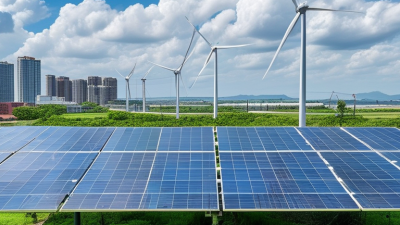
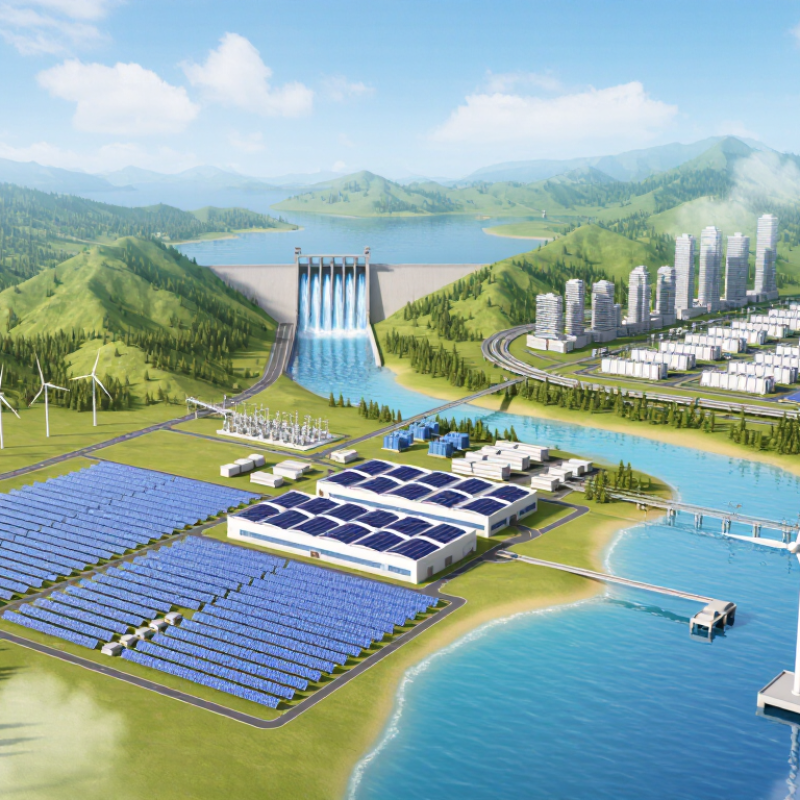
China has become a major force in renewable energy development. Its progress combines large-scale solar farms, offshore wind projects, hydropower, battery storage, and modern power networks. These technologies form the foundation of China’s green power energy solutions, serving factories, transport systems, commercial buildings, and rural communities.

The strongest solutions are not limited to generating electricity. They also manage demand, reduce transmission losses, and improve supply stability. Solar panels cover industrial rooftops, while wind turbines operate across northern plains and coastal waters. Battery systems store surplus electricity for evening demand. Green hydrogen is also being tested for steel, chemicals, and heavy transport, although costs and infrastructure remain challenging.

No portfolio is perfect.

This article examines China’s leading solutions through practical performance, scalability, cost, and environmental impact. It considers how projects operate in different climates and grid conditions, rather than treating every technology as universally suitable. Reliable assessment requires more than impressive capacity figures. It should include equipment quality, maintenance records, grid connection, land use, recycling plans, and verified emissions data.

Some weaknesses deserve attention. Renewable projects can face curtailment, uneven regional development, supply-chain pressure, and uncertain returns. These issues do not erase China’s achievements, but they require careful judgment. Drawing on industry practices, public energy policies, and technical evaluation methods, this guide explains where China’s clean-energy strengths are most credible. It also identifies areas needing further improvement, helping readers compare solutions with greater confidence and less promotional bias.
What Are China Top Green Power Energy Solutions?

China’s Green Power Landscape and Its Role in Energy Transition

China’s green power landscape is expanding at unusual speed. The National Energy Administration reported 887 gigawatts of solar capacity and 521 gigawatts of wind capacity by the end of 2024. Together, they represented nearly half of the country’s installed power capacity. In western provinces, solar panels now stretch across dry, open terrain, while wind turbines operate along northern ridges. The scale is impressive.

Yet energy transition means more than building generation. The International Energy Agency projects China will provide almost 60% of global renewable capacity additions between 2024 and 2030. This growth requires stronger transmission, flexible demand, and reliable storage. Pumped hydro, electrochemical batteries, and improved forecasting help move electricity from midday solar peaks into evening demand. The National Energy Administration reported more than 73 gigawatts of new energy storage capacity by the end of 2024. That number signals progress, but storage duration still matters.

Grid integration remains an unfinished task. Renewable output can rise sharply after sunrise, then weaken during evening heating or industrial demand. Regional power trading and green electricity certificates can improve allocation and traceability. However, certificate quality, price signals, and local consumption rules still need refinement. The Ember China Electricity Data Review shows coal generation remains significant, despite rapid clean-energy growth. This tension deserves honest attention. New capacity alone cannot guarantee a lower-carbon system; utilization, grid flexibility, and transparent accounting will decide the transition’s credibility.

Solar Power Solutions: Utility-Scale, Rooftop, and Distributed Systems

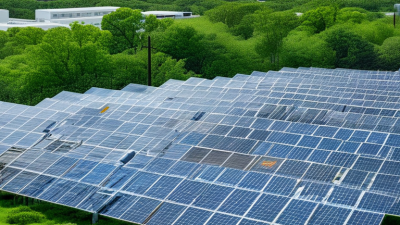
China’s green power transition increasingly depends on practical solar power solutions. Utility-scale solar farms place thousands of panels across suitable land, producing electricity for regional grids. These projects need careful studies of sunlight, soil, drainage, transmission capacity, and ecological impact. A low-cost site can become expensive if new grid connections are required. Grid stability matters as much as panel capacity.

Rooftop solar uses existing buildings instead of additional land. Factories, warehouses, schools, and homes can generate electricity close to where it is consumed. Engineers should inspect roof strength, fire access, cable routes, and shading before installation. Dust, nearby buildings, and seasonal shadows can reduce actual output. The roof may look ideal, but measurements tell a different story.

Distributed systems connect smaller solar arrays across communities or industrial zones. They can reduce transmission losses and improve local energy resilience. Battery storage can hold midday electricity for evening demand, although battery costs and replacement planning remain important. Early yield estimates are sometimes too optimistic. Weather, maintenance delays, and inverter failures are easy to underestimate. Reliable projects use monitoring systems, scheduled inspections, and transparent performance records. No design is perfect. China’s best solar solutions will combine strong engineering with honest evaluation of limitations.

What Are China Top Green Power Energy Solutions? - Solar Power Solutions: Utility-Scale, Rooftop, and Distributed Systems

Evaluation Dimension Utility-Scale Solar Power Rooftop Solar Power Distributed Solar Systems
Typical Project Scale Usually tens of megawatts to more than 1 gigawatt, depending on land availability and grid capacity. Commonly several kilowatts to several megawatts per building, facility, or campus. Generally small- to medium-sized projects installed near electricity consumers, ranging from kilowatt-scale systems to low-megawatt installations.
Primary Application Large-scale electricity generation for the public grid, renewable energy bases, industrial supply, and long-term power contracts. On-site electricity generation for factories, warehouses, commercial buildings, public facilities, and residential properties. Local generation for industrial parks, rural communities, agricultural facilities, commercial districts, and institutional users.
Typical Installation Location Desert, Gobi, barren land, saline land, fishery areas, and other large open sites with suitable solar resources. Building roofs, factory roofs, warehouse roofs, parking structures, and residential rooftops. Distributed rooftops, small ground-mounted sites, agricultural land with compatible use, and facilities close to demand centers.
Grid Connection Usually connected to medium- or high-voltage networks, with power transferred over longer distances when required. Often connected behind the customer meter to low-voltage or medium-voltage distribution networks. Normally connected to nearby distribution networks, reducing the distance between generation and consumption.
Electricity Use Model Primarily exported to the grid or delivered through centralized power-purchase arrangements. Self-consumption is usually prioritized, with surplus electricity exported to the grid where permitted. Local consumption, shared use within a park or community, and limited surplus export depending on the connection agreement.
Main System Components PV modules, mounting structures, centralized or string inverters, transformers, monitoring equipment, switchgear, and transmission connections. PV modules, roof mounting systems, inverters, protection devices, monitoring equipment, and optional energy storage. PV modules, distributed inverters, local transformers, energy management systems, monitoring equipment, and optional batteries.
Energy Storage Compatibility Suitable for large battery storage, pumped-storage coordination, and other grid-balancing resources where economically and technically justified. Suitable for batteries that increase self-consumption, provide backup power, and reduce peak electricity purchases. Suitable for shared or behind-the-meter storage that manages local peak demand, voltage, and solar curtailment.
Land and Space Requirement Requires substantial land or water surface and careful assessment of land-use compatibility, ecology, and grid access. Uses existing building surfaces and generally requires little or no additional land. Uses existing roofs, industrial sites, agricultural facilities, or other local spaces; land requirements are usually lower than utility-scale projects.
Construction Considerations Requires resource assessment, land approval, environmental review, grid studies, transmission planning, and large-scale civil works. Requires structural roof assessment, waterproofing protection, fire-safety review, cable routing, and coordination with building operations. Requires multiple-site coordination, local grid-capacity analysis, standardized design, and compliance with distribution-network requirements.
Generation Efficiency Factors Solar irradiation, module orientation, tracking systems, dust, temperature, grid congestion, and curtailment strongly affect output. Roof orientation, shading, tilt angle, roof condition, temperature, cleaning, and the building’s daytime load profile are important. Site diversity, local shading, feeder capacity, load matching, system availability, and distribution-network conditions influence performance.
Key Advantages High generation capacity, economies of scale, centralized operation, and strong contribution to regional renewable-energy targets. Low land consumption, reduced transmission losses, lower daytime electricity purchases, and direct use of existing building space. Generation close to demand, improved local energy resilience, reduced distribution losses, and flexible deployment across many sites.
Main Challenges Large capital requirements, long-distance transmission needs, land-use coordination, grid congestion, and possible renewable-energy curtailment. Limited roof area, shading, structural constraints, variable load demand, roof-access issues, and possible replacement or renovation of the building. Complex ownership and settlement arrangements, uneven distribution-grid capacity, multiple approval processes, and greater operational coordination.
Best-Suited Users Utilities, grid operators, infrastructure investors, energy-intensive industries, and regional renewable-energy developers. Factories, logistics facilities, shopping centers, offices, schools, hospitals, public buildings, and homeowners. Industrial parks, rural communities, agricultural operators, commercial complexes, public institutions, and local energy-service providers.
Typical Operating Life PV modules are commonly designed for approximately 25–30 years, while inverters and other electrical equipment may require replacement earlier. PV modules commonly operate for approximately 25–30 years, subject to roof conditions, maintenance, and equipment replacement cycles. PV modules commonly operate for approximately 25–30 years, with electrical equipment, batteries, and control systems maintained or replaced as needed.
Note: Actual project size, electricity output, connection voltage, financial performance, and permitting requirements vary by location, solar resource, land or roof conditions, local electricity demand, and applicable Chinese energy regulations.

Wind Energy Solutions Across Coastal, Northern, and Offshore Regions

China’s wind power strategy is becoming more regional and practical. Northern provinces offer vast plains, strong winter winds, and available land for large onshore projects. According to the Global Wind Energy Council’s Global Wind Report 2024, China added about 75.9 gigawatts of wind capacity in 2023. Its total installed capacity reached roughly 441.4 gigawatts. However, distance remains a serious weakness.

Coastal wind solutions can support industrial zones and densely populated cities. Shorter transmission routes may reduce grid losses and improve power delivery. In the north, hybrid projects can combine wind, solar, storage, and flexible transmission. This approach helps balance seasonal output. The National Energy Administration reported that wind and solar capacity continued expanding rapidly in 2023, while renewable electricity use also increased. The figures are strong, but curtailment and local grid congestion still require careful planning.

Offshore wind offers another path, especially near shallow coastal waters. China had approximately 37.7 gigawatts of offshore wind capacity by the end of 2023, according to the Global Wind Energy Council. Fixed-bottom turbines currently suit many nearshore areas. Floating systems could later serve deeper waters, although costs, maintenance access, typhoons, and marine ecology create difficult engineering questions. Not every coast needs the same design. Salt corrosion is visible on equipment. Weather changes quickly. That assumption is risky. Better projects use measured wind data, seabed surveys, wildlife monitoring, and transparent performance reporting.

Hydropower, Biomass, and Emerging Renewable Energy Technologies

What Are China’s Top Green Power Energy Solutions?

China’s hydropower fleet remains a foundation for clean electricity. The National Energy Administration reported about 436 gigawatts of installed hydropower capacity by the end of 2024. Reservoirs can balance daily solar and wind fluctuations, especially during evening demand peaks. Pumped storage adds another layer of flexibility. The International Energy Agency expects China to deliver nearly 60% of global renewable capacity growth through 2030. However, droughts and changing rainfall patterns can reduce dependable output. The picture is not flawless.

Biomass offers a more local solution. Agricultural residues, livestock waste, and organic municipal waste can produce dispatchable electricity and biogas. China’s biomass power capacity exceeded 45 gigawatts in recent national energy statistics. Its value is practical: crop waste gains a purpose, while rural heating systems may reduce coal use. Yet transport costs, seasonal supply, and air-control requirements remain difficult. Not every waste stream is economical.

Emerging technologies are moving quickly. Offshore wind, distributed solar, advanced batteries, and green hydrogen are expanding China’s renewable toolkit. The International Renewable Energy Agency recorded China as the world’s largest renewable capacity market in 2024. Battery storage can help stabilize solar-heavy grids, but recycling systems and mineral supply chains need stronger evidence. Green hydrogen may support steel, chemicals, and heavy transport, although current production costs remain high. Some projections still sound optimistic. Real-world performance will matter more than impressive capacity totals.

Energy Storage, Smart Grids, and Green Power Integration Challenges

What Are China’s Top Green Power Energy Solutions?

China’s renewable build-out is reshaping its power system. The National Energy Administration reported 1.89 terawatts of installed renewable capacity by the end of 2024. That represented about 56.7% of total generation capacity. The International Energy Agency expects China to deliver nearly 60% of global renewable capacity additions through 2030. Solar farms now stretch across western provinces, while wind turbines operate through changing seasonal conditions. The scale is impressive.

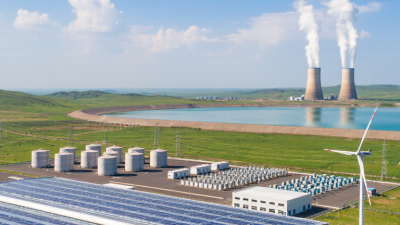
But electricity must move when and where people need it. New-type energy storage reached 73.76 gigawatts and 168 gigawatt-hours by the end of 2024, according to the National Energy Administration. Lithium-based systems respond quickly, while longer-duration storage remains less mature. A four-hour battery can shift evening solar output, but it cannot solve every winter shortage. Costs, safety management, and battery degradation still require closer evaluation.

Smart grids provide another essential layer. Digital substations, flexible demand, forecasting software, and high-voltage transmission can coordinate distant renewable resources. The China Electricity Council has repeatedly highlighted stronger flexibility needs as variable generation expands. In practice, a factory may reduce cooling demand for fifteen minutes, while a household battery charges during midday surplus. Small actions matter. Yet grid data, market rules, and regional coordination remain uneven. Curtailment figures can also change with weather, transmission limits, and reporting methods. That uncertainty deserves more attention before promising a perfectly integrated green-power system.

China’s Green Power Capacity: Renewable Growth and Integration Needs

China’s installed power-generation capacity reached approximately 2.92 TW at the end of 2023. Wind and solar together accounted for about 1.05 TW, increasing the need for energy storage, flexible grids, and improved renewable-power integration.

Data source: China National Energy Administration, year-end 2023 installed power-generation capacity. Values are rounded and shown in gigawatts (GW). Key integration challenges include variable wind and solar output, transmission across regions, peak-load balancing, and the expansion of grid-scale energy storage.

CORPORATE HEADQUARTERS

North America

California

AGIC Energy North America LLC
13025 Danielson Street, Suite 105
Poway, CA 92064 – USA
Phone Number: +1 (858) 842 1513
Email: info@site_cc52bd27-560c-4f9d-bd66-63718fc42539
Sales: sales@site_cc52bd27-560c-4f9d-bd66-63718fc42539