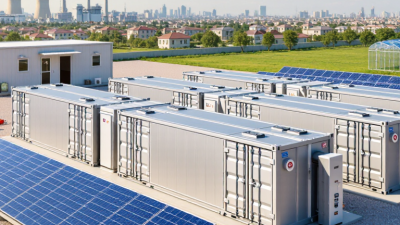
2026 Top Solar Energy Storage Solutions for Global Buyers
In 2026, solar energy storage solutions are becoming essential for households, businesses, and remote facilities worldwide. Solar panels generate power during daylight, but demand often peaks after sunset. A properly matched battery can store excess electricity for evening lighting, refrigeration, cooling, and essential equipment. This practical benefit matters most where grid reliability remains uneven or electricity prices change frequently.
Global buyers must compare more than battery capacity. Lithium iron phosphate batteries offer strong cycle performance and stable thermal characteristics. Hybrid inverters can coordinate solar generation, battery charging, backup loads, and grid interaction. However, equipment performance depends on climate, installation quality, software settings, and daily usage. A system designed for a cool European home may perform differently in a hot, humid coastal market. Details matter.
Reliable purchasing decisions require documented test results, clear warranties, service availability, and qualified local installers. Buyers should examine usable capacity, round-trip efficiency, emergency backup capability, operating temperature, and expected degradation. Independent certifications and transparent technical documentation provide stronger evidence than attractive marketing claims. Price remains important, but the cheapest system may create higher replacement or maintenance costs later.
No solution fits every market. That deserves honest attention. Some forecasts also underestimate permitting delays, shipping constraints, and user behavior. This guide evaluates leading storage approaches through performance, safety, total ownership cost, and practical deployment experience. It aims to help international buyers ask better questions before choosing equipment for homes, commercial buildings, farms, or resilient off-grid applications.
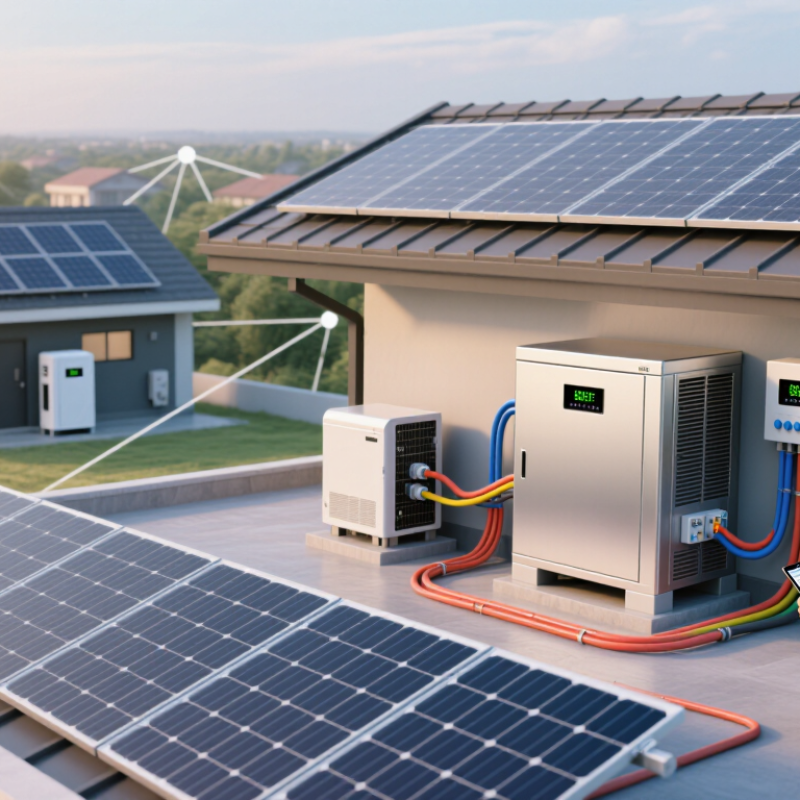
Solar Energy Storage: Core Concepts and System Components
Solar energy storage shifts electricity from bright midday hours to evening demand. The system combines photovoltaic panels, a battery pack, power conversion equipment, controls, and protection devices. Battery cells store direct current, while an inverter converts it into usable alternating current. A battery management system monitors voltage, temperature, and cell balance. The energy management system then decides when to charge, discharge, or preserve capacity.
The International Energy Agency reported that global battery storage additions reached about 42 GW in 2023, rising more than 130% year on year. The National Renewable Energy Laboratory’s 2024 Annual Technology Baseline places typical battery round-trip efficiency near 85–95%, depending on design and operating conditions. These figures matter, but they are not universal. Heat, cycling patterns, grid rules, and installation quality can change actual results. A neat datasheet can still hide practical losses.
Tips:
Ask for usable capacity, not only nameplate capacity. Confirm inverter power in kilowatts and battery energy in kilowatt-hours. Check thermal management, emergency isolation, fire protection, and warranty conditions. For a small commercial site, a two-hour battery may reduce evening peaks. A longer duration may suit weak-grid conditions. Do not size storage from annual solar production alone. Review fifteen-minute load data, cloudy-day performance, and planned expansion. This step is often missed. One more caution: software controls deserve the same scrutiny as hardware.
Leading Solar Storage Technologies for Global Buyers in 2026
Solar storage is moving from backup equipment to a core energy asset. The IEA’s Batteries and Secure Energy Transitions report estimates that global battery storage must grow sixfold by 2030. This growth supports solar power during evening demand, grid congestion, and short outages. Lithium iron phosphate batteries remain practical for many projects. They offer strong cycle life, stable thermal performance, and lower material risk. Sodium-ion systems are also emerging. Their performance in cold climates still needs closer field validation.
For global buyers, the best system combines battery cells, a hybrid inverter, energy management software, and thermal protection. BloombergNEF reported a sharp decline in lithium-ion battery prices during 2024. However, installed costs still vary by country, financing, labor, transport, and safety requirements. IRENA’s renewable capacity data also shows solar remains the fastest-growing renewable technology. Storage therefore needs flexible sizing, not simply the largest battery available. Bigger is not always better.
Tips: Compare usable capacity, warranty conditions, round-trip efficiency, and degradation assumptions. Request test records from independent laboratories. Check whether the system supports local grid codes and cybersecurity controls. Ask for performance data from similar climates. Some sales forecasts look too optimistic. Buyers should test every claim against actual operating conditions, especially heat, humidity, and weak-grid behavior.
2026 Top Solar Energy Storage Solutions for Global Buyers
Typical round-trip efficiency ranges for commercially deployed energy-storage technologies used with solar power systems.
Lithium-ion systems generally provide the highest efficiency for daily solar shifting, while pumped hydro, flow batteries, compressed-air storage, and thermal storage can offer advantages in duration, site conditions, safety, or large-scale capacity. Values are representative commercial ranges based on commonly reported technology performance.
How to Compare Capacity, Efficiency, Safety, and System Lifespan
2026 Top Solar Energy Storage Solutions for Global Buyers
Comparing storage systems starts with usable capacity, not the advertised battery size. A 10 kWh unit may provide only 8 kWh after reserve limits and conversion losses. Check daily energy demand, peak loads, and backup duration together. A home using 18 kWh each day may need more than one small battery during cloudy weather. Numbers need context. Ask for usable capacity at the stated operating temperature.
Efficiency also deserves careful reading. Round-trip efficiency shows how much energy returns after charging and discharging. A system rated at 95% may perform lower with high temperatures, partial loads, or aging cells. Request test conditions, inverter efficiency, standby consumption, and performance data from independent laboratories. Real output matters more than a polished specification sheet.
Safety should include cell chemistry, thermal monitoring, ventilation, isolation, and emergency shutdown controls. Certifications must match the installation market and local electrical rules. System lifespan depends on cycle depth, heat management, software controls, and service access. Look for cycle-life data at a defined capacity-retention level, such as 80%. Warranty language can still be vague. Read exclusions carefully. A longer warranty is not automatically better if repair support is difficult or replacement logistics are slow. Practical buyers should compare five-year operating costs, not only the purchase price.
Regional Requirements, Incentives, and Grid Compatibility
2026 Top Solar Energy Storage Solutions for Global Buyers
Regional Requirements, Incentives, and Grid Compatibility
Solar storage buyers should treat geography as an engineering specification, not a shipping destination. The IEA’s Batteries and Secure Energy Transitions report indicates that battery storage capacity must expand sharply this decade to support renewable growth. However, a system designed for a 60 Hz network may need different controls for Europe’s 50 Hz grids. Voltage, islanding protection, reactive power, and communication protocols also vary.
In the European Union, buyers should verify conformity with applicable CE requirements, grid codes, and IEC safety standards. In the United States, IEEE 1547 interconnection rules and UL 9540 certification are common screening points. The Inflation Reduction Act also made standalone storage eligible for a 30% investment tax credit under qualifying conditions. Rules differ by project location. They change.
In Australia, grid-forming capability and remote-dispatch functions are increasingly valuable as renewable penetration rises. In India and Southeast Asia, high temperatures, dust, weak-grid conditions, and limited service coverage deserve equal attention. IRENA’s Renewable Power Generation Costs report shows that falling renewable costs do not remove integration expenses. Buyers should request tested round-trip efficiency, degradation curves, thermal-management data, and local maintenance plans. NREL research also highlights the importance of validated safety testing and realistic operating profiles.
A practical mistake is comparing battery prices alone. A cheaper pack can become expensive after transformers, permits, software integration, fire protection, and grid studies are added.
Selecting the Right Solar Storage Solution for Different Applications
Selecting the right solar storage solution starts with the application, not the battery size. Residential users often need compact systems for evening consumption and short outages. Commercial facilities usually require peak shaving, demand-charge control, and reliable daytime solar absorption. Utility projects need longer-duration storage for grid balancing and renewable energy shifting. The IEA’s Batteries and Secure Energy Transitions report estimates that global battery storage capacity must expand sixfold by 2030, reaching 1,200 GW. That growth will not follow one design.
For homes, lithium iron phosphate systems can offer strong cycle life and stable thermal performance. For factories, compare usable capacity, power output, ambient-temperature performance, and warranty limits. A battery with high energy capacity may still perform poorly during short, sharp demand peaks. Utility buyers should examine round-trip efficiency, degradation curves, auxiliary consumption, and grid-code compatibility. BloombergNEF reported an average lithium-ion pack price of 115 dollars per kWh in 2024, down 20 percent year on year. Lower prices help, but cheaper storage is not automatically better storage.
Tips: Match storage duration to the load profile. Review twelve months of interval data. Test the system during cloudy weeks, not only sunny days. Include fire protection, monitoring, and end-of-life planning. No sizing formula is perfect. Real buildings change, and forecasts can be wrong. Procurement teams should leave room for future loads, software updates, and imperfect operating conditions.
Related Posts
-
Why Choose Solar Storage Solutions for Global Buyers?
-
China Top Solar Energy Storage Solutions Suppliers?
-

Top 10 Green Power Solutions for Sustainable Business Growth?
-
How to Choose the Best Solar Panels Solutions for Your Home?
-

What are the Best Green Energy Solutions for Global Buyers?
-
How to Choose Home Energy Storage Solutions?
CORPORATE HEADQUARTERS
North America
California
AGIC Energy North America LLC
13025 Danielson Street, Suite 105
Poway, CA 92064 – USA
Phone Number: +1 (858) 842 1513
Email: info@site_cc52bd27-560c-4f9d-bd66-63718fc42539
Sales: sales@site_cc52bd27-560c-4f9d-bd66-63718fc42539