China Top 10 Energy Storage Solutions Manufacturers
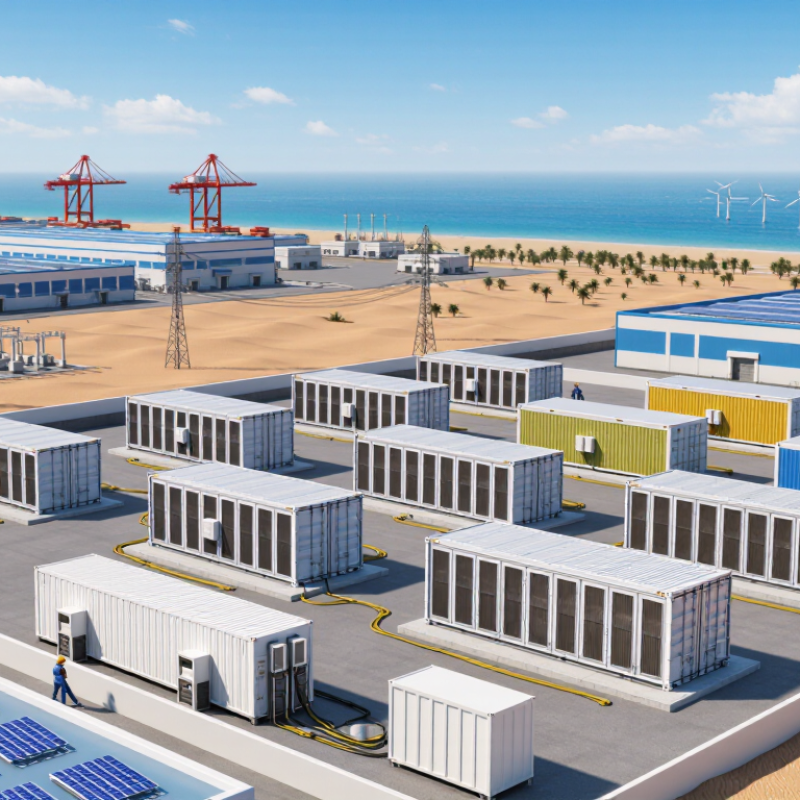
China’s energy storage solutions market has moved from pilot projects to large-scale deployment. Factory roofs, desert substations, and coastal industrial parks now host battery systems measured in megawatt-hours. This shift makes China’s leading manufacturers important to global buyers.
The International Energy Agency reported in Batteries and Secure Energy Transitions that global battery storage additions in the power sector more than doubled in 2023. China contributed a substantial share of this expansion, supported by strong manufacturing capacity and fast renewable-energy growth. The report also emphasizes that batteries must become safer, more durable, and easier to recycle. Scale alone is not enough.
“Batteries are a crucial technology for clean energy transitions,” said Fatih Birol, Executive Director of the IEA. His statement reflects the industry’s central challenge: storing electricity reliably when sunlight and wind change by the hour. The best suppliers combine lithium iron phosphate cells, battery management systems, thermal controls, software, and responsive after-sales service.
This Top 10 overview evaluates Chinese manufacturers through practical criteria. These include shipment experience, product safety, system efficiency, warranty terms, certifications, project references, and international support. Public financial information and project data also matter. Marketing claims can look impressive. Field performance matters more.
No ranking is perfect.
A supplier with excellent containerized systems may not suit a household project. Another may offer lower costs but weaker overseas maintenance. Buyers should therefore compare cycle life, usable capacity, degradation guarantees, fire protection, grid compatibility, and total ownership costs. The following manufacturers represent influential names in China’s rapidly developing energy storage solutions sector, while reminding readers to verify current specifications before purchasing.
China’s Energy Storage Industry and Its Global Role
China Top 10 Energy Storage Solutions Manufacturers
China’s energy storage industry has become a major force in the global transition to cleaner power. Its manufacturers supply battery cells, power conversion systems, battery management software, and complete containerized projects. This broad production base helps reduce costs and shorten delivery times for overseas developers. A standard project may include outdoor battery cabinets, thermal controls, fire monitoring, and remote performance data.
The industry’s global role extends beyond exporting hardware. Chinese companies support solar farms, wind projects, industrial parks, and grid-scale installations across different climates. Engineers must adjust systems for desert heat, coastal humidity, weak grids, and strict local safety rules. In practical projects, software accuracy matters as much as battery capacity. Poor forecasting can leave stored electricity unused during peak demand.
Yet the sector is not flawless. Fast manufacturing growth can create pressure on recycling, raw material supply, and long-term quality control. Some buyers focus heavily on the lowest purchase price. That choice may increase maintenance costs later. Independent testing, transparent warranties, and verified operating data are essential before deployment. Certifications also need careful review because requirements vary by country. Field experience shows that a reliable storage system is not simply a large battery. It is a coordinated asset involving engineering, software, safety planning, financing, and trained local technicians. Policy changes and uneven grid infrastructure still create uncertainty for international projects.
China Top 10 Energy Storage Solutions Manufacturers — China’s Energy Storage Industry and Its Global Role
China’s energy storage industry has expanded rapidly alongside renewable-energy deployment. The chart shows the estimated cumulative operating capacity of new energy storage systems in China, excluding pumped-hydro storage.
Unit: GW. Figures are rounded public estimates based on reporting from China’s National Energy Administration and the China Energy Storage Alliance.
How the Top 10 Manufacturers Are Selected and Compared
China Top 10 Energy Storage Solutions Manufacturers
Selecting the top ten requires more than checking shipment volumes or website claims. The comparison begins with verified manufacturing capacity, engineering experience, and documented project performance. Factory visits can reveal practical details, including cell storage conditions, fire-control systems, testing equipment, and production traceability.
Each manufacturer is assessed against a consistent scorecard. Important factors include battery chemistry, usable energy, round-trip efficiency, thermal management, and system integration. We also examine power conversion equipment, energy management software, grid compatibility, and cybersecurity controls. Safety records matter greatly. Test reports, certifications, warranty terms, and field failure data provide stronger evidence than promotional language.
Real projects add necessary context. A utility-scale installation operating through hot summers may show more than a short laboratory test. We compare delivery performance, spare-parts planning, remote monitoring, and local technical support. Financial stability is also reviewed, because long-term maintenance depends on more than product quality. The ranking is not perfect. Public data can be incomplete, and operating conditions differ across regions. Some manufacturers disclose detailed results, while others provide limited evidence. This limitation must remain visible when comparing the final ten. Performance should be judged over time, not through a single impressive specification.
Profiles of China’s Top 10 Energy Storage Solutions Manufacturers
China’s top 10 energy storage solutions manufacturers reflect a rapidly scaling market, not a single technology path. This profile compares their strengths in lithium-ion systems, flow batteries, thermal management, power conversion, and software controls. Selection should consider delivered projects, safety testing, warranty clarity, and long-term service capacity. China’s National Energy Administration reported that new energy storage capacity exceeded 30 GW by the end of 2023. That figure shows scale, but not consistent quality.
The leading manufacturers generally serve utility, commercial, and renewable integration projects. Some focus on containerized systems with liquid cooling and integrated fire protection. Others develop high-cycle storage for solar-heavy grids or industrial users. The IEA reported that global battery storage additions reached about 42 GW in 2023, nearly doubling from the previous year. China remains a major contributor. Still, installed capacity can hide weak after-sales support, unclear degradation assumptions, or difficult spare-parts access. No profile is flawless. That deserves more honest discussion.
Tips: Compare usable energy, not only rated capacity. Ask for round-trip efficiency at partial load, thermal runaway test results, degradation curves, and response time. Review independent certification and project references from similar climates. A low purchase price may become expensive when cooling, software updates, and maintenance are included. These checks often reveal more than a polished product brochure.
| Rank | Profile ID | Primary Manufacturing Base | Core Energy-Storage Products | Main Battery Chemistry | Typical System Scale | Key Application Areas | Grid-Connection Capability | International Market Coverage | Common Compliance Scope | Primary Competitive Strength |
|---|---|---|---|---|---|---|---|---|---|---|
| 1 | Profile 01 | South China coastal manufacturing cluster | Utility-scale battery containers, battery racks, EMS | LFP | 1–20 MWh per project block | Renewable integration, peak shifting, frequency regulation | High-voltage AC integration and grid-support controls | Asia-Pacific, Europe, Middle East, North America | IEC, UL, UN 38.3, CE-related requirements | Large-scale integration and project delivery |
| 2 | Profile 02 | East China advanced-battery cluster | Grid-scale systems, commercial cabinets, battery cells | LFP and NMC | 100 kWh–10 MWh | Commercial storage, microgrids, renewable firming | PCS-integrated systems with islanding options | Europe, Southeast Asia, Australia, North America | IEC 62619, IEC 63056, UN 38.3, regional fire codes | Cell-to-system manufacturing integration |
| 3 | Profile 03 | Central China industrial equipment base | Containerized storage, PCS, energy-management platforms | LFP | 500 kWh–5 MWh | Industrial parks, solar-plus-storage, backup power | Medium- and high-voltage distribution interfaces | China, South Asia, Africa, Latin America | IEC, CE, UN 38.3 and project-specific local approvals | Flexible customization for industrial users |
| 4 | Profile 04 | Southwest China battery and power-electronics base | Battery modules, rack systems, hybrid renewable storage | LFP | 100 kWh–8 MWh | Hydropower support, rural microgrids, solar storage | Microgrid control and black-start-compatible designs | Southeast Asia, Africa, Latin America | IEC, CE, UN 38.3 and national electrical standards | Performance in distributed and remote applications |
| 5 | Profile 05 | Pearl River Delta electronics cluster | Residential batteries, all-in-one systems, hybrid inverters | LFP | 5–30 kWh per installation | Rooftop solar, household backup, time-of-use optimization | Single-phase and three-phase residential integration | Europe, Australia, South Africa, Southeast Asia | CE, IEC 62619, UN 38.3 and market-specific grid codes | Compact design and installer-friendly deployment |
| 6 | Profile 06 | North China power-equipment manufacturing base | Utility battery systems, battery management systems, switchgear | LFP and sodium-ion development lines | 1–100 MWh project portfolios | Renewable bases, transmission support, industrial backup | High-voltage substations and utility dispatch interfaces | Domestic projects and selected overseas EPC markets | IEC, GB/T, UN 38.3 and utility procurement standards | Utility engineering and system-level reliability |
| 7 | Profile 07 | East China electrical-appliance cluster | Commercial storage cabinets, EV-charging storage, EMS | LFP | 100 kWh–2 MWh | Factories, logistics centers, charging stations | Demand management and dynamic-load balancing | Europe, Southeast Asia and domestic markets | CE, IEC, UN 38.3 and local commercial installation codes | Integrated charging and storage solutions |
| 8 | Profile 08 | South China energy-equipment cluster | Outdoor battery cabinets, telecom backup, modular ESS | LFP | 10 kWh–1 MWh | Telecommunications, data networks, distributed backup | Low-voltage DC and AC-coupled architectures | Asia-Pacific, Africa and Latin America | IEC, CE, UN 38.3 and telecom-sector requirements | Modularity and operation in harsh environments |
| 9 | Profile 09 | Yangtze River Delta automation cluster | Industrial battery packs, BMS, automated storage systems | LFP and NMC | 50 kWh–5 MWh | Manufacturing, robotics, data centers, critical facilities | UPS, DC-coupled and AC-coupled configurations | Europe, Japan, South Korea and Southeast Asia | IEC, UL, CE, UN 38.3 and industrial safety standards | Automation, monitoring and lifecycle diagnostics |
| 10 | Profile 10 | Northwest China renewable-energy equipment base | Large battery containers, renewable-storage packages, EMS | LFP | 2–50 MWh per project phase | Solar and wind power balancing, ancillary services | Utility dispatch, ramp-rate control and reactive-power support | Domestic renewable bases and selected Belt and Road markets | GB/T, IEC, UN 38.3 and utility-level fire-safety requirements | High-capacity deployment in renewable-energy zones |
Key Technologies, Products, and Application Scenarios
China Top 10 Energy Storage Solutions Manufacturers
China’s leading energy storage manufacturers compete through key technologies, reliable products, and flexible applications. Lithium iron phosphate cells dominate many systems because they balance safety, cost, and cycle life. Power conversion systems manage bidirectional electricity flow, while energy management systems forecast demand and control charging. Thermal management remains critical. A hot container can lose efficiency quickly.
The International Energy Agency reported that global battery storage additions reached about 42 GW in 2023, nearly doubling within one year. China’s National Energy Administration reported over 31 GW of new energy storage capacity by the end of 2023, excluding pumped hydro. These figures explain the rapid development of containerized battery systems, modular cabinets, and large-scale storage stations. Products now serve renewable integration, peak shaving, frequency regulation, microgrids, and backup power.
Application conditions still decide the right solution. A solar farm may need four-hour storage for evening demand. A factory may prefer a smaller system for demand-charge control. Remote sites require strong dust protection, fire monitoring, and simple maintenance access. Field experience shows that capacity alone is not enough. Site temperature, grid quality, and operating habits often shape real returns. Engineers should test degradation assumptions carefully. Forecasts can be too optimistic. Safety also requires layered design, including cell monitoring, gas detection, fire suppression, and emergency procedures. IEA analysis continues to emphasize that storage deployment must grow alongside grid flexibility and renewable generation.
Market Trends and Future Prospects for Chinese Manufacturers
China’s leading energy storage manufacturers are moving beyond battery production. They now develop complete systems for factories, solar farms, microgrids, and electric vehicle charging sites. Lithium iron phosphate remains widely used because it offers stable performance and lower thermal risk. Containerized systems are also gaining attention. A standard unit can integrate batteries, inverters, cooling equipment, and fire protection.
Market demand is becoming more practical. Developers want longer cycle life, faster installation, and clearer maintenance data. Digital monitoring platforms can track temperature differences between battery modules, detect abnormal voltage, and support remote service. In coastal projects, manufacturers must also consider humidity and salt exposure. These details often decide whether a system performs reliably after five years.
Costs are still important, but the cheapest proposal may create hidden risks. Some suppliers provide limited warranty data or unclear degradation assumptions. Buyers should examine testing records, response times, recycling plans, and performance under partial loads. The industry is improving, though quality remains uneven. That deserves honest attention.
Future growth will likely come from grid flexibility, commercial storage, and renewable energy integration. Chinese manufacturers have strong advantages in supply-chain coordination and large-scale production. However, international expansion requires stronger compliance, local technical support, and transparent communication. Standards may differ across markets. A successful supplier will need more than competitive pricing. It will need dependable evidence, adaptable engineering, and patience during long project cycles.
Related Posts
-
10 Tips for Choosing Renewable Energy Storage Solutions
-
What Are Renewable Energy Storage Solutions?
-
Top Energy Storage Solutions for a Sustainable Future?
-
Top 10 Clean Energy Storage Solutions in China?
-
China Top Solar Energy Storage Solutions Suppliers?
-
What Are Energy Storage Solutions and How Do They Work?
CORPORATE HEADQUARTERS
North America
California
AGIC Energy North America LLC
13025 Danielson Street, Suite 105
Poway, CA 92064 – USA
Phone Number: +1 (858) 842 1513
Email: info@site_cc52bd27-560c-4f9d-bd66-63718fc42539
Sales: sales@site_cc52bd27-560c-4f9d-bd66-63718fc42539