What Are the Best Clean Energy Storage Solutions in China?
China’s clean energy storage solutions matter because wind and solar output can change within hours. Storage helps move electricity from sunny midday periods into evening demand. But no single technology fits every site. Not quite that simple.
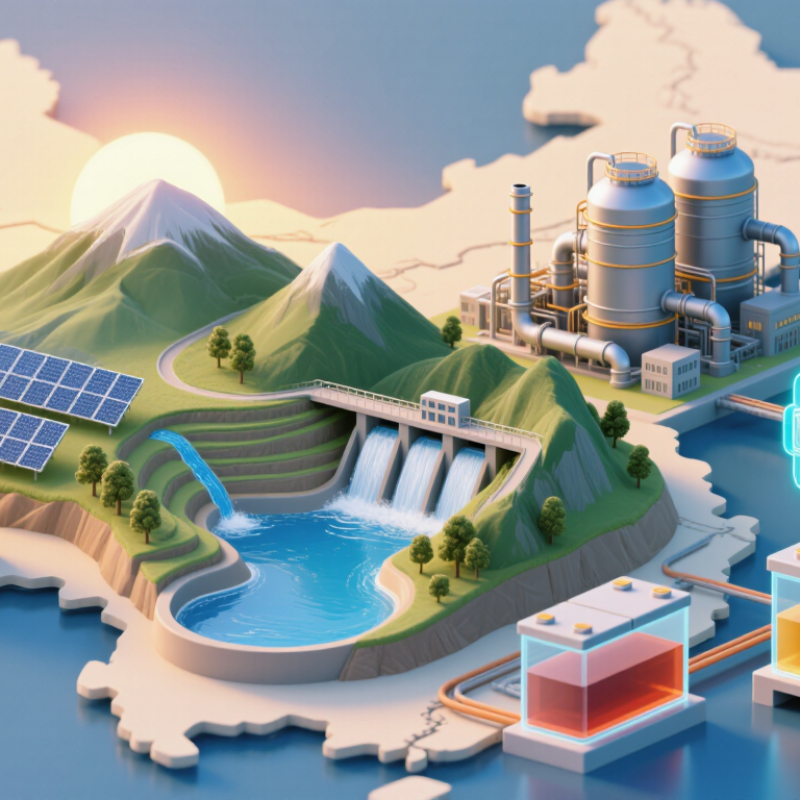
The options include lithium-ion batteries, pumped hydropower, flow batteries, thermal storage, and emerging sodium-ion systems. Each has different costs, operating needs, and suitable durations. Batteries can respond quickly near solar farms or industrial loads. Pumped hydro can store large amounts of energy where geography and water access allow. Thermal systems can retain heat for factories and buildings, rather than returning every stored unit as electricity.
IEA Executive Director Fatih Birol has emphasized the importance of batteries in the clean-energy transition. This reflects a broader point: storage supports renewable integration, but it does not replace stronger grids, careful planning, or flexible demand. Comparing technologies requires attention to project location, storage duration, safety practices, and lifecycle costs—not just headline capacity.
This guide examines China’s leading clean energy storage solutions and the trade-offs behind them. It will consider mature technologies alongside newer options, while distinguishing commercial deployments from promising pilots. A ranking can be useful, but it can also oversimplify. The best choice depends on what the system needs, and the evidence available for each project.
China’s Clean Energy Storage Needs and Policy Landscape
China’s clean-energy storage needs are shaped by rising wind and solar output, uneven geography, and daily demand swings. Solar generation may peak at noon, while homes and factories need more electricity in the evening. Storage can shift some power between those hours and support grid stability. No single technology fits every site.
Policy increasingly emphasizes renewable integration and a more flexible power system. Yet provincial rules differ. Projects may face different connection requirements, dispatch arrangements, and revenue models. Batteries can respond quickly; pumped hydro can provide longer-duration storage where terrain and water resources permit. Thermal storage may suit some industrial users. These options are not interchangeable. A policy target does not guarantee steady project income—a gap that deserves scrutiny.
Tips: Check local grid plans, expected dispatch hours, and payment mechanisms before comparing equipment. Ask for measured efficiency and degradation assumptions, not just headline capacity. Small details matter. Test a low-renewable week in financial models, too; forecasts can look tidier than real operations. Verify current provincial guidance before committing, since local rules can change.
Major Energy Storage Technologies Used in China
China’s storage mix is led by lithium-ion batteries, pumped hydro, compressed air, flow batteries, and thermal storage. Each serves a different job. Batteries can respond quickly to grid fluctuations and fit near solar or wind farms. Pumped hydro stores energy by moving water between reservoirs, but needs suitable terrain and long construction timelines. Compressed-air and flow-battery projects offer other options, though deployment remains more limited.
CNESA’s 2023 annual statistics reported 31.39 GW of cumulative “new-type” energy storage in China, excluding pumped hydro, with 66.87 GWh of capacity. Lithium-ion systems dominated this category. Their short response times suit frequent balancing, while pumped hydro is better established for large-scale, longer-duration storage. Thermal storage can shift heat demand, especially where industrial processes use steam. No technology is perfect. Project costs and performance depend on site conditions, operating cycles, and grid needs; published figures do not always compare like with like.
Tips: Match storage duration to the task. Check local grid connection, temperature, and cycling needs before comparing costs. A battery that looks efficient on paper may lose value if it cycles too rarely.
How China’s Storage Solutions Compare in Cost and Performance
What Are the Best Clean Energy Storage Solutions in China?
How China’s Storage Solutions Compare in Cost and Performance
China’s storage market is expanding quickly, but no single technology suits every project. The National Energy Administration reported 73.76 GW of new-type energy storage capacity by the end of 2024, with about 2.3 hours of average storage duration. Lithium-ion systems are widely used for short-duration balancing because they respond quickly and fit compact sites. The International Energy Agency reported battery prices fell roughly 90% between 2010 and 2023. That trend helps, but battery prices are not the same as installed project costs.
Pumped hydropower can provide longer-duration storage, often for many hours, but depends on suitable terrain and major civil works. Flow batteries may suit frequent cycling and longer discharge periods, though their footprint and project economics need careful checking. Thermal storage can be practical where heat is needed directly, rather than converted back into electricity. Small details matter: a two-hour battery beside a solar plant solves a different problem from overnight supply. The cheapest option on paper may not be cheapest over its full operating life.
Tips: Compare cost per delivered megawatt-hour, not just equipment price. Check duration, round-trip efficiency, site conditions, and replacement assumptions. I would treat forecasts cautiously; local grid needs can change the answer.
What Are the Best Clean Energy Storage Solutions in China? — How China’s Storage Solutions Compare in Cost and Performance
| Storage solution | Indicative installed cost (RMB/kWh) |
Typical discharge duration | Round-trip efficiency | Typical service life | Best-fit applications and trade-offs |
|---|---|---|---|---|---|
| Lithium iron phosphate (LFP) batteries | 700–1,300 | 2–4 hours | 85–92% | About 10–15 years; roughly 4,000–8,000 cycles, depending on operating conditions | A mature, widely deployed option for grid balancing, renewable-energy shifting, and fast response. Strong efficiency and modularity; usable life depends on temperature, depth of discharge, and operating strategy. |
| Sodium-ion batteries | About 900–1,600; early-stage estimates with limited comparable project data | 2–4 hours | About 80–90% in system-level estimates | Project- and chemistry-dependent; large-scale operating records remain limited | An emerging alternative for stationary storage, with potential supply-chain and low-temperature advantages. Cost, cycle life, and performance are less established than LFP at utility scale. |
| Vanadium redox flow batteries | 1,500–3,000 | 4–10+ hours | 65–80% | Often 15–25 years; stack maintenance may be needed | Well suited to frequent cycling and longer-duration stationary storage. Energy capacity can be expanded by adding electrolyte tanks, but upfront cost, footprint, and efficiency are less favorable than LFP for short-duration service. |
| Pumped-storage hydropower | About 600–1,700, converted from project capital cost and reservoir storage capacity; highly site-dependent | Typically 6–12 hours; some projects provide longer storage | 70–80% | About 40–80 years | A proven choice for large-scale, long-duration storage and grid reliability. Long construction timelines, substantial capital needs, and suitable-site requirements limit where it can be built. |
| Compressed-air energy storage (CAES) | About 1,000–2,500; project-specific and not directly comparable across designs | Typically 4–10+ hours | About 50–70%, depending on system design | Potentially 25–40 years; operating history varies by design | Can provide long-duration storage at large scale. Performance and economics depend on underground storage, thermal management, and system configuration; deployment is less mature than pumped hydro or LFP. |
Notes: Figures are indicative ranges for China-oriented, utility-scale projects, not guaranteed prices or performance. Cost estimates are expressed per kWh of rated storage capacity and may differ in scope, including equipment, installation, and balance-of-system costs; pumped-hydro estimates are especially sensitive to project duration and site conditions. Actual performance and lifetime depend on design, operating conditions, financing, and maintenance. Thermal storage is not included because its stored heat is not directly comparable with electricity-storage capacity.
Key Applications Across China’s Power System
China’s power system needs storage in different places and for different reasons. In wind-rich northern regions, batteries can absorb surplus electricity during strong overnight output and release it during morning demand. Solar-heavy areas face a similar mismatch: generation peaks around midday, while household use often rises later. Storage shifts some of that energy into the evening.
At grid scale, pumped-storage plants can move large amounts of electricity between off-peak and peak hours, where suitable terrain and water are available. Batteries respond faster, helping balance short-term fluctuations and support frequency control. Near transmission bottlenecks, local storage can ease pressure on lines when renewable generation is abundant. It cannot replace new grid infrastructure, though. The fit is not perfect.
Storage also serves industrial parks, remote communities, and charging hubs. A facility with rooftop solar and a battery can reduce its reliance on peak-period grid supply, while backup systems can keep essential equipment running during interruptions. In remote areas, combining storage with local renewable generation may reduce dependence on long-distance connections. Performance depends on careful sizing, safety controls, and maintenance. A battery that is too small may fill before the strongest solar hours end; one that is oversized can tie up capital without enough use. The best solution depends on local demand, grid conditions, and how long stored power must last.
Factors Shaping the Future of Energy Storage in China
China’s next energy-storage gains will depend less on installing batteries alone and more on where, how, and when they operate. Wind farms in the northwest can face hours of surplus generation, while coastal factories need dependable evening power. Storage must connect these different rhythms. Grid access, dispatch rules, and local transmission capacity can decide whether a project earns value or sits underused. That is easy to overlook. Short-duration lithium-ion systems suit rapid balancing, but longer gaps may call for other chemistries, pumped hydropower, or thermal storage. Each option brings trade-offs in land, response time, cost, and operating life. One technology will not fit every province.
Costs remain important, yet dependable revenue matters just as much. Project developers need clear signals for capacity, flexibility, and peak-shaving services. Safety also shapes deployment: cell design, spacing, ventilation, monitoring, and emergency drills must work together at each site. Recycling plans deserve attention before systems reach retirement, not after. China’s manufacturing scale is an advantage, but it can also encourage rapid construction before grid needs are fully understood. That tension deserves more scrutiny. Planners should test storage against hourly demand, seasonal renewable output, and transmission bottlenecks. Forecasts are imperfect; a neat spreadsheet cannot capture every local constraint.
Related Posts
-
10 Tips for Choosing Renewable Energy Storage Solutions
-
What Are Renewable Energy Storage Solutions?
-
China Top 10 Energy Storage Solutions Manufacturers
-
Top Energy Storage Solutions for a Sustainable Future?
-
How to Choose Sustainable Energy Solutions in 2026
-
What Are the Top Energy Storage Solutions in 2026?
CORPORATE HEADQUARTERS
North America
California
AGIC Energy North America LLC
13025 Danielson Street, Suite 105
Poway, CA 92064 – USA
Phone Number: +1 (858) 842 1513
Email: info@site_cc52bd27-560c-4f9d-bd66-63718fc42539
Sales: sales@site_cc52bd27-560c-4f9d-bd66-63718fc42539