Top Sustainable Energy Solutions for Businesses
Businesses are under pressure to lower energy costs and reduce emissions without disrupting daily operations. Sustainable energy solutions can help, but the right mix depends on a company’s buildings, equipment, location, and energy use. A warehouse with a broad, sunny roof has different options from a small office in a leased building. The details matter.
Fatih Birol, Executive Director of the International Energy Agency, has described energy efficiency as “the first fuel.” The idea is practical: reducing wasted power can make every later investment work harder. A business might begin by reviewing utility bills, checking heating and cooling schedules, and measuring consumption at major equipment. Then it can compare options such as rooftop solar, renewable electricity contracts, battery storage, or electrified heating. Some projects may offer clear benefits; others may not fit the site or budget.
The transition is rarely neat. A solar array cannot fix an inefficient building, and a battery is not automatically worthwhile. Even a careful plan may need revision when operating hours, tariffs, or equipment change. This guide explores sustainable energy solutions for businesses, including their uses, trade-offs, and practical questions to ask before investing. It is a starting point, not a substitute for a site-specific energy assessment. That distinction is easy to overlook.
Understanding Business Energy Needs and Sustainability Goals
A business cannot choose a useful energy solution until it understands when, where, and why it uses power. A small office may peak during winter mornings, while a food producer may run refrigeration around the clock. Start with the meter. Review utility bills alongside interval data, opening hours, equipment schedules, and seasonal demand. A sudden evening spike might point to ventilation or refrigeration running longer than staff realize. The data can be messy, and bills alone rarely explain the whole picture. The first estimate is not always right.
Set goals that fit the operation, not just a broad promise to be greener. A warehouse might prioritize lower peak demand and better lighting; a hotel may focus on heating, hot water, and guest comfort. Ask which loads can shift, which must stay constant, and what disruption staff can tolerate. That matters. Compare options using expected savings, maintenance needs, installation time, and emissions impact. Targets should have a baseline, a deadline, and a person responsible for tracking them. Recheck performance after changes; a control setting that looks efficient on paper may cause complaints or extra energy use in practice. Keep readings by month and by operating area, even when the results are inconvenient.
Assessing Renewable Energy Sources for Commercial Use
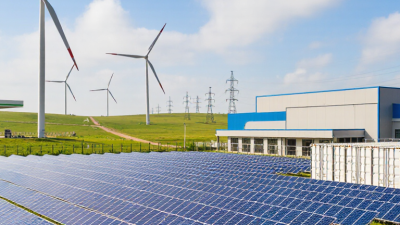
Commercial buyers should assess renewable energy by load profile, site constraints, and contract terms. A warehouse with broad, unshaded roof space may suit solar panels. Roof space matters. Yet seasonal production can miss evening demand, so interval-meter data and storage costs deserve close review.
The International Energy Agency’s Renewables 2024 report forecasts nearly 5,500 gigawatts of new renewable capacity worldwide between 2024 and 2030, with solar photovoltaics supplying almost 80% of that growth. This signals expanding supply, not guaranteed savings for every business. Compare a rooftop system with a power purchase agreement, checking escalation clauses, project location, and delivery timing. Wind is different. On-site turbines need suitable wind conditions, space, and careful noise assessment; off-site contracts can widen access but add grid and pricing considerations.
IRENA’s Renewable Power Generation Costs in 2023 reports that 81% of newly commissioned utility-scale renewable capacity that year had lower generation costs than the cheapest fossil-fuel alternative. That is useful context, not a commercial bill forecast: local tariffs, network charges, financing, and backup needs still shape costs. Hydropower and geothermal may offer steadier output where resources and infrastructure permit, but availability varies sharply by region. A practical assessment should test hourly demand against generation estimates and include maintenance downtime. Models can look precise. Inputs often are not.
Comparing On-Site Generation With Green Power Procurement
Businesses comparing on-site generation with green power procurement should start with their electricity use, not a technology checklist. Review hourly bills, seasonal demand, and the share of power used during daylight. A warehouse with broad, unshaded roof space may suit solar panels. A leased office with limited roof access may not.
On-site systems can reduce grid purchases and provide visible, local generation, but output varies with weather and operating conditions. Storage may help shift some power into evening hours, though it adds cost and maintenance. Green power procurement can cover demand beyond a site’s generation. Options include renewable electricity contracts and energy attribute certificates. Check contract length, delivery location, certificate tracking, and how claims are reported. The comparison is rarely neat. A low-cost contract may not match a company’s priorities for local impact or new renewable capacity.
Tips: Ask for interval-meter data before estimating savings. Compare total costs, including installation, maintenance, fees, and contract terms. Verify that environmental attributes are not claimed twice. If the numbers remain uncertain, test assumptions with a small pilot or independent energy review. Good decisions still involve trade-offs.
Integrating Energy Storage, Efficiency, and Smart Controls
Top Sustainable Energy Solutions for Businesses
Integrating Energy Storage, Efficiency, and Smart Controls
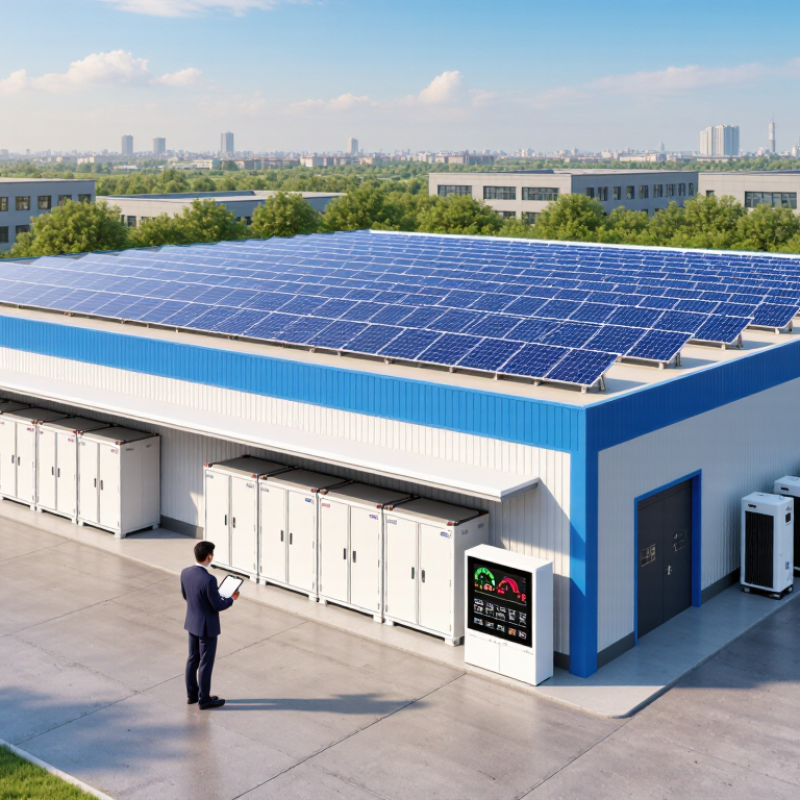
Businesses can cut energy waste by combining storage, efficiency upgrades, and smart controls. The pieces work best together. A battery can store excess solar power or lower-cost electricity for later use. Efficient lighting, motors, and heating systems reduce the amount of energy the building needs. Smart controls can shift flexible loads, such as water heating, to quieter demand periods. Start with interval-meter data and a walk-through of the site. A chilly office or a compressor running after closing may reveal more than a monthly bill.
Storage is not automatically economical. Its value depends on local rates, the building’s load profile, equipment costs, and how often it cycles. Controls also need careful setup; poorly chosen schedules can make rooms uncomfortable or move demand to another peak. Track electricity use, peak demand, indoor conditions, and maintenance issues before and after changes. Review the results each season. Early estimates may miss real operating habits, and that is worth admitting.
Tips: Begin with a small, measurable change. Set controls around actual occupancy, not a generic calendar. Ask a qualified energy professional to check proposed storage sizing and electrical capacity. Keep a manual override for unusual days, and revisit settings when staff or operating hours change.
Top Sustainable Energy Solutions for Businesses
Integrating energy storage, efficiency, and smart controls starts with understanding where commercial buildings use energy.
Space heating and lighting account for substantial portions of commercial building energy use, making them useful targets for efficiency upgrades and smart controls. Energy storage can help shift electricity use to different times; it does not directly reduce the building’s energy demand.
Source: U.S. Energy Information Administration, 2018 Commercial Buildings Energy Consumption Survey (CBECS). Shares are rounded estimates of total commercial building energy use. EIA CBECS
Evaluating Costs, Emissions, and Implementation Requirements
Energy choices look different once installation costs, emissions, and site limits share the same spreadsheet. IRENA’s Renewable Power Generation Costs in 2023 found that 81% of newly commissioned utility-scale renewable capacity generated electricity more cheaply than fossil-fuel alternatives. But that figure is not a business’s full project cost. Connection charges, roof reinforcement, storage, and backup supply can change the calculation. The catch? Local tariffs matter.
Emissions comparisons also need a consistent boundary. The IPCC’s Fifth Assessment Report gives median lifecycle emissions of about 11 grams of CO₂-equivalent per kilowatt-hour for wind, 48 for solar photovoltaic, and 490 for natural gas. These are global estimates, not site-specific guarantees. A business should check its electricity use by hour, available roof or land area, and grid connection timeline before selecting a system. A winter-heavy factory may value dependable output more than a sunny office does.
Implementation takes practical work. A site audit can reveal shading, weak roof sections, or limited electrical capacity before equipment is ordered. Storage may help manage peak demand, but its added cost and replacement schedule deserve careful modelling. A neat spreadsheet can still miss operational disruption during construction. That uncertainty should be stated plainly, not hidden behind a polished payback estimate.
Top Sustainable Energy Solutions for Businesses: Evaluating Costs, Emissions, and Implementation Requirements
Planning comparison for businesses in the United States. Costs and emissions vary by location, project design, utility rates, and electricity mix; use these figures as screening guidance rather than project quotations.
| Solution | Typical Cost Profile | Emissions Impact | Implementation Requirements | Best Suited For | Key Considerations |
|---|---|---|---|---|---|
| On-site solar photovoltaic (PV) | Medium-to-high upfront investment; low operating costs. Economics depend on system size, financing, incentives, electricity tariffs, and available roof or land. | Typical lifecycle emissions are approximately 20–60 g CO₂e/kWh, substantially below conventional fossil-fuel generation. | Requires a suitable roof or site, structural and electrical assessments, utility interconnection approval, permits, and an installation period that can take several months. | Businesses with usable roof or land area, daytime electricity demand, and a long-term site commitment. | Output varies with sunlight and weather. Export compensation, roof condition, and local interconnection capacity can materially affect project value. |
| Off-site renewable power purchase agreement (PPA) | Usually low upfront capital for the buyer; contracted energy prices and terms vary by market, contract length, project, and delivery structure. | Can support low-carbon generation. Market-based Scope 2 accounting generally requires eligible contractual instruments and careful emissions reporting; it does not by itself change the electricity physically delivered to a facility. | Requires electricity-use data, credit and legal review, procurement expertise, and a contract that fits the business’s load and risk tolerance. Direct delivery may require additional market arrangements. | Large or multi-site businesses that cannot install enough generation on-site and can enter long-term contracts. | Review settlement structure, price risk, contract duration, project additionality, certificate ownership, and applicable reporting rules. |
| Renewable electricity certificates (RECs) or equivalent instruments | Low upfront cost and generally flexible purchasing; prices vary significantly with region, technology, vintage, and product quality. | May support market-based Scope 2 claims when instruments meet applicable quality criteria and are properly retired. The purchase does not directly reduce a facility’s on-site fuel use or physical grid emissions. | Requires matching purchases to electricity consumption, checking geographic and temporal eligibility, retaining retirement records, and applying recognized reporting guidance. | Businesses seeking a flexible procurement option, especially when direct generation or a PPA is not practical. | Do not treat certificates as a substitute for energy efficiency or direct emissions reductions. Claims should accurately describe the accounting method used. |
| Wind power procurement or on-site wind | Off-site procurement usually avoids project construction costs but entails contract and market considerations. On-site wind has high capital and site-development requirements. | Typical lifecycle emissions are approximately 7–20 g CO₂e/kWh. | Off-site options require procurement and contract review. On-site projects require a strong wind resource, adequate space, resource assessment, permits, interconnection, and community engagement. | Businesses with substantial electricity demand; on-site projects are most practical at large, open sites with suitable wind resources. | Wind output is variable and site-specific. Permitting, setbacks, aviation or wildlife review, and grid access can affect feasibility. |
| Battery energy storage | High upfront cost relative to simple controls; costs depend on power capacity, storage duration, chemistry, installation, and replacement needs. | Storage is not an energy source and has lifecycle emissions. Its climate benefit depends on charging electricity, round-trip losses, operating schedule, and whether it enables additional renewable generation or displaces higher-emitting power. | Requires load and tariff analysis, electrical and fire-safety design, permits, interconnection review, and a control strategy for peak management, backup, or renewable shifting. | Facilities facing demand charges, power-quality concerns, resilience needs, or periods of high renewable generation. | Model actual utility tariffs and battery degradation. Backup capability may require separate equipment and operating arrangements. |
| Air-source heat pumps | Medium-to-high upfront cost, depending on building modifications and equipment size; operating costs depend on electricity and fuel prices, climate, and system efficiency. | Can reduce heating emissions compared with fossil-fuel systems, especially on a lower-carbon grid. Savings vary with local electricity emissions, seasonal performance, and the system being replaced. | Requires heating and cooling load assessment, suitable electrical capacity, equipment placement, refrigerant management, and possible duct or controls upgrades. | Offices, retail, and other buildings replacing older heating or cooling equipment, particularly where one system can provide both services. | Evaluate performance in local winter conditions, backup heat needs, refrigerant leakage, and total cost over the equipment life. |
| Ground-source heat pumps | High upfront cost due to ground-loop installation; operating costs can be lower than conventional heating and cooling, depending on site and utility rates. | Emissions depend mainly on electricity supply and system performance. Efficient operation can reduce building energy use compared with conventional heating and cooling systems. | Requires geological and site assessment, drilling or trenching, permitting, specialized design, and coordination with building construction or major renovations. | New construction or major renovations with long ownership horizons and sufficient land or drilling access. | Ground-loop feasibility, drilling conditions, and project payback are highly site-specific; early design integration can improve economics. |
| Energy efficiency and building controls | Ranges from low-cost operational changes to medium- or high-cost retrofits. Payback depends on energy prices, operating hours, baseline performance, and project scope. | Reduces energy-related emissions in proportion to energy saved; the effect depends on the fuels and electricity that would otherwise have been used. | Begin with an energy audit and interval-data review. Measures may include LED lighting, control tuning, insulation, ventilation optimization, and efficient motors or equipment. | Nearly all businesses, especially buildings with high energy use, long operating hours, or aging equipment. | Often a practical first step: efficiency can reduce bills and emissions while lowering the size of future renewable-energy and storage projects. |
Notes: Lifecycle emissions are indicative literature-based ranges for electricity-generation technologies and are not facility-specific. They include emissions across relevant life-cycle stages, not just operation. Building-system emissions savings depend on the existing equipment, local grid, and actual performance. Confirm current costs, incentives, regulations, and emissions-accounting requirements with qualified local professionals before making investment or reporting decisions.
Related Posts
-
2026 Top Green Power Energy Solutions for Global Buyers
-

What Are the Top Clean Green Energy Solutions?
-
2026 Best Green Energy Solutions for Global Buyers
-
What Are China Top Green Power Energy Solutions?
-
How to Choose Sustainable Energy Solutions in 2026
-
10 Clean Energy Solutions Tips for Global Buyers
CORPORATE HEADQUARTERS
North America
California
AGIC Energy North America LLC
13025 Danielson Street, Suite 105
Poway, CA 92064 – USA
Phone Number: +1 (858) 842 1513
Email: info@site_cc52bd27-560c-4f9d-bd66-63718fc42539
Sales: sales@site_cc52bd27-560c-4f9d-bd66-63718fc42539